
How to recognise aircraft?
Whether you want to identify a modern jet airliner, a historic fighter, a strange private airplane or helicopter, it all starts with certain characteristics that you'll need to look for. Foremost this means: what type of aircraft is it? Is it an airplane or a helicopter? These have different sets of features. Then, the following questions are: is it propelled by jet engines or propellers, where are the engines placed, what is the location and shape of the wings, what does the landing gear look like and what is the tail plane configuration? Finally, you get into the details, like the shape of the nose, the cockpit and cabin windows, whether the airplane has winglets, etc.
At first, it may seem very difficult, but once you have learned what to look for, you can easily find the differences between the many airplane and helicopter types. To help you getting started, on this page the main aircraft features to look for to distinguish aircraft types are defined, supported by schematic drawings of the most common forms they can appear in.
Do you first want to learn more about the naming of airplane and helicopter parts then click here!
Type of aircraft
First, you will need to determine what type of aircraft you try to identify, as the characteristics may not be applicable to all types. Therefore, on this website we consider three different types of aircraft, all having a separate page to support identification:
- Airplanes, aircraft with wings providing the lift as the aircraft is propelled forward by thrust from jet engines, rocket engines and/or propellers. Some airplanes are considered tiltrotors or tiltwings, airplanes with propellers that can be rotated (or the whole wing) so that they become rotors providing lift for vertical flight.
- Helicopters and eVTOLs, a type of aircraft with one or more powered rotors lifting it to the air vertically and propelling it horizontally. Usually, these rotorcraft don't have wings, or at least the wings are not the primary means for providing lift. Typically, helicopters have one or two rotors, while eVTOLs can have many more.
- Autogiros, a type of rotorcraft that uses an unpowered rotor to develop lift. Forward motion is needed to make the rotor spin, typically provided by an engine-driven propeller.
Wing configuration
There are four different ways of characterising the wing configuration:
- The number of wings; most airplanes nowadays have one wing on each side of the fuselage, but in the early days airplanes with two or more wings were common.
- The shape of the wings, straight or swept, elliptical or delta, wings come in all sort of shapes. See figures below.
- The location where the wings are attached to the fuselage, e.g. through the fuselage or on top of the fuselage. See figures below.
- The angle at which the wings are attached to the fuselage, swept upward (dihedral) of downward (anhedral) or straight. See figures below.
Note that on the figures below, the wing features are very obvious, but in reality it can be more difficult to clearly determine the wing type and attachment.
Wing shapes
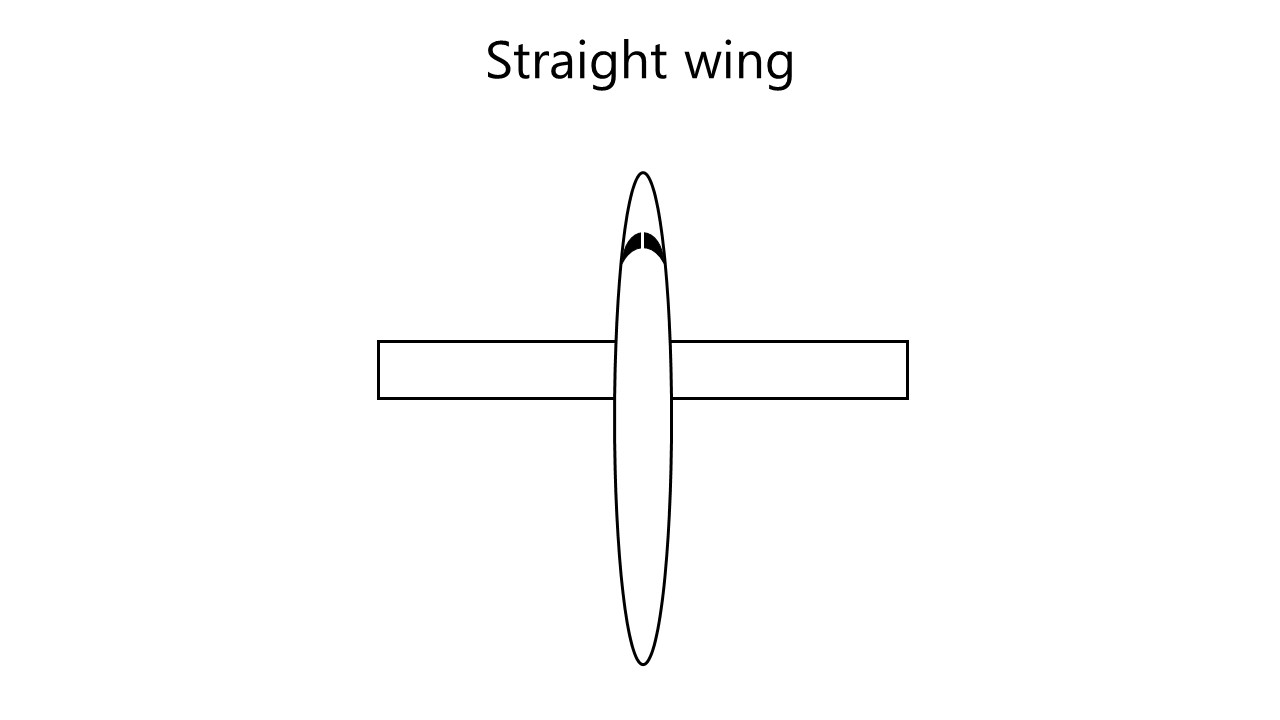
Officially it means that the (quarter) chord is at a straight angle compared to the fuselage, but beware that the leading and trailing edge may have a (small) sweep angle when the wings are tapered.
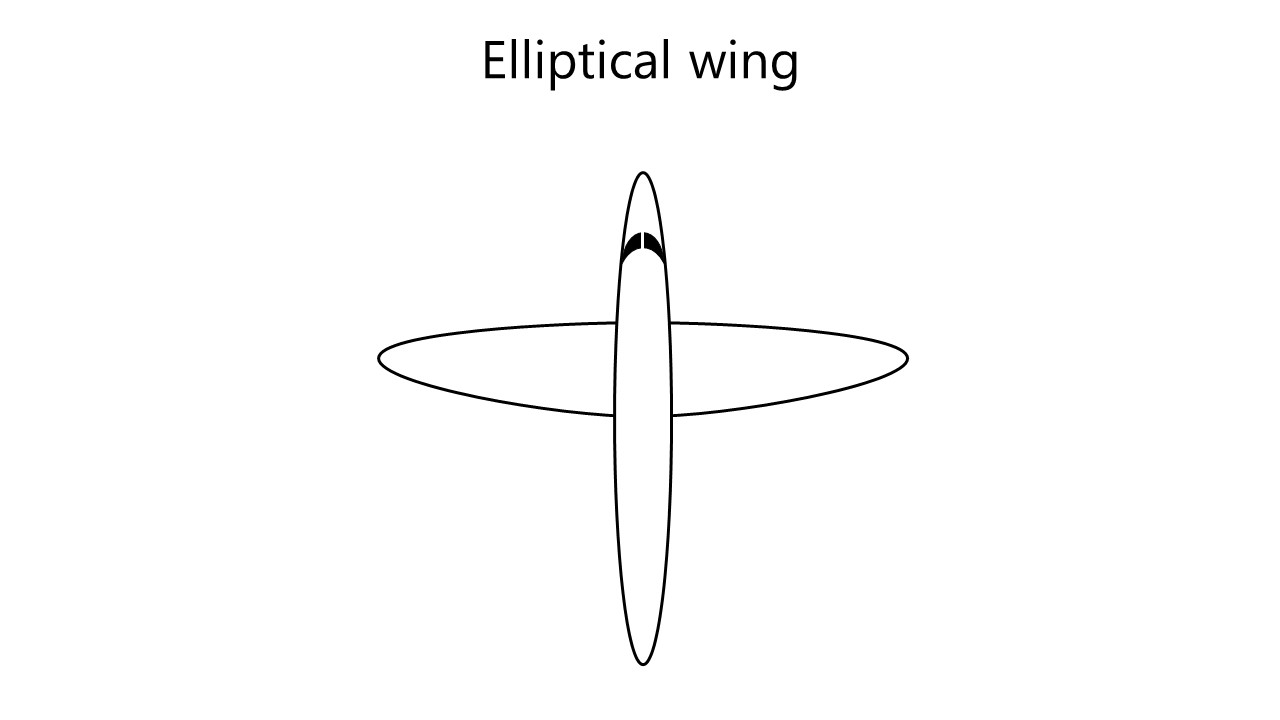
The trailing and/or leading edge of elliptical wings have the shape of an ellipse.
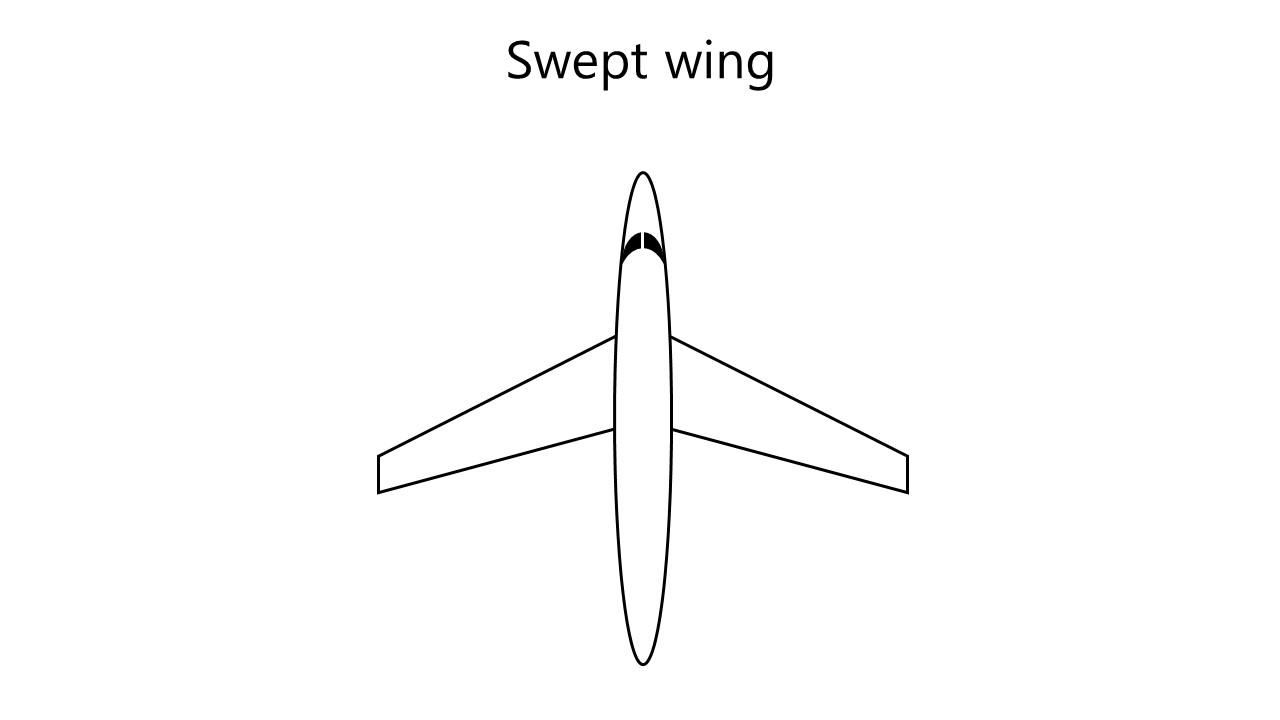
For the sake of simplicity we considered swept wings as wings where both leading and trailing edge have a (positive) sweep angle.
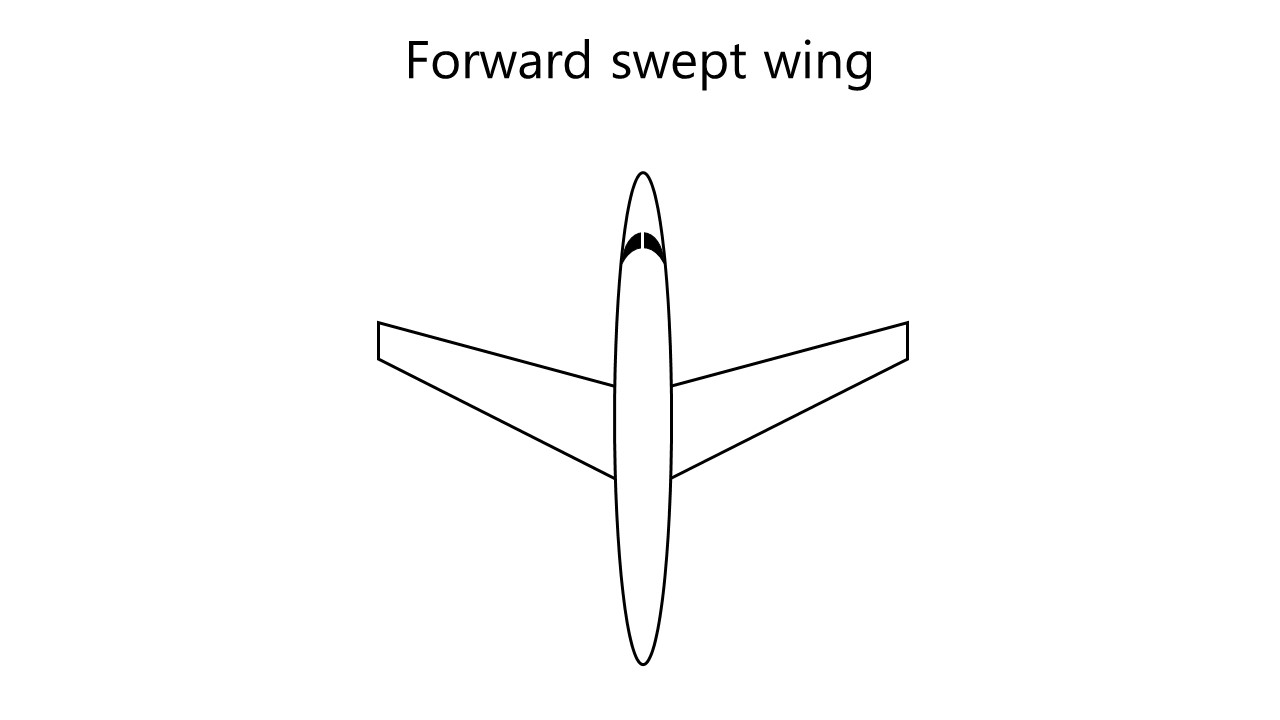
Forward swept wings are the same as the regular swept wings, but then with negative sweep angles.
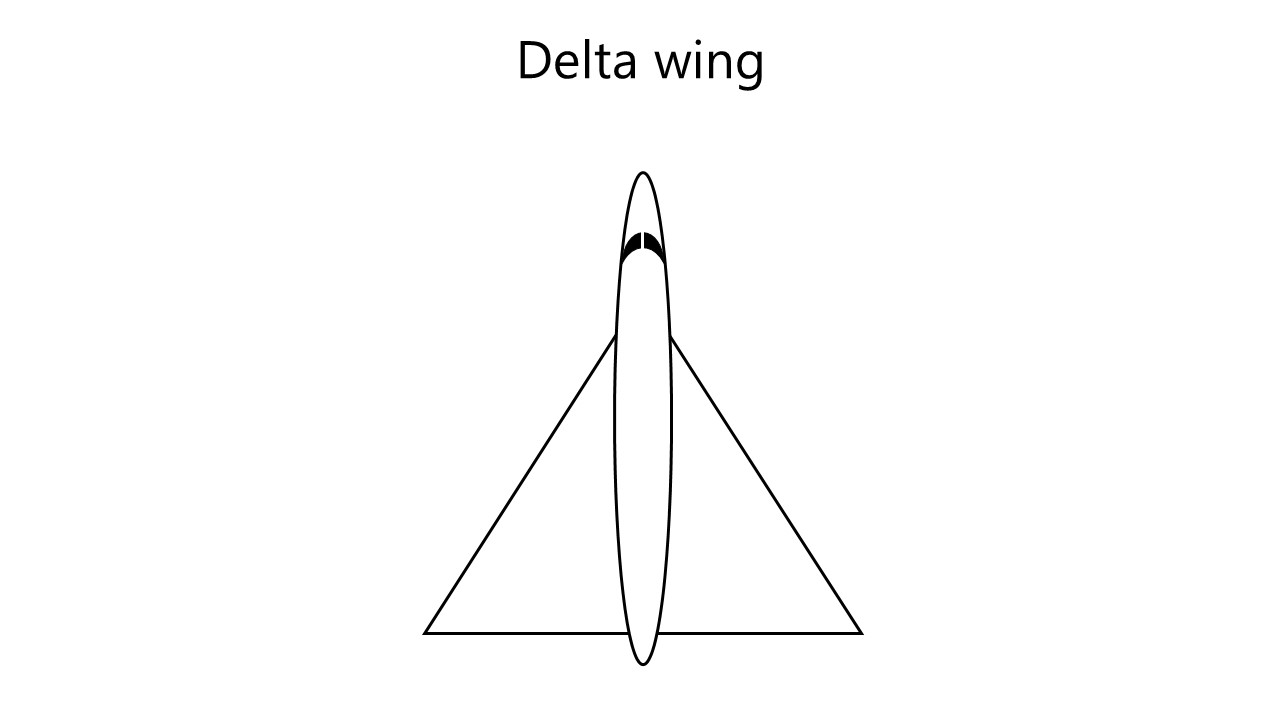
Delta wings have the shape of a triangle, just like the Greek letter D, i.e. delta)
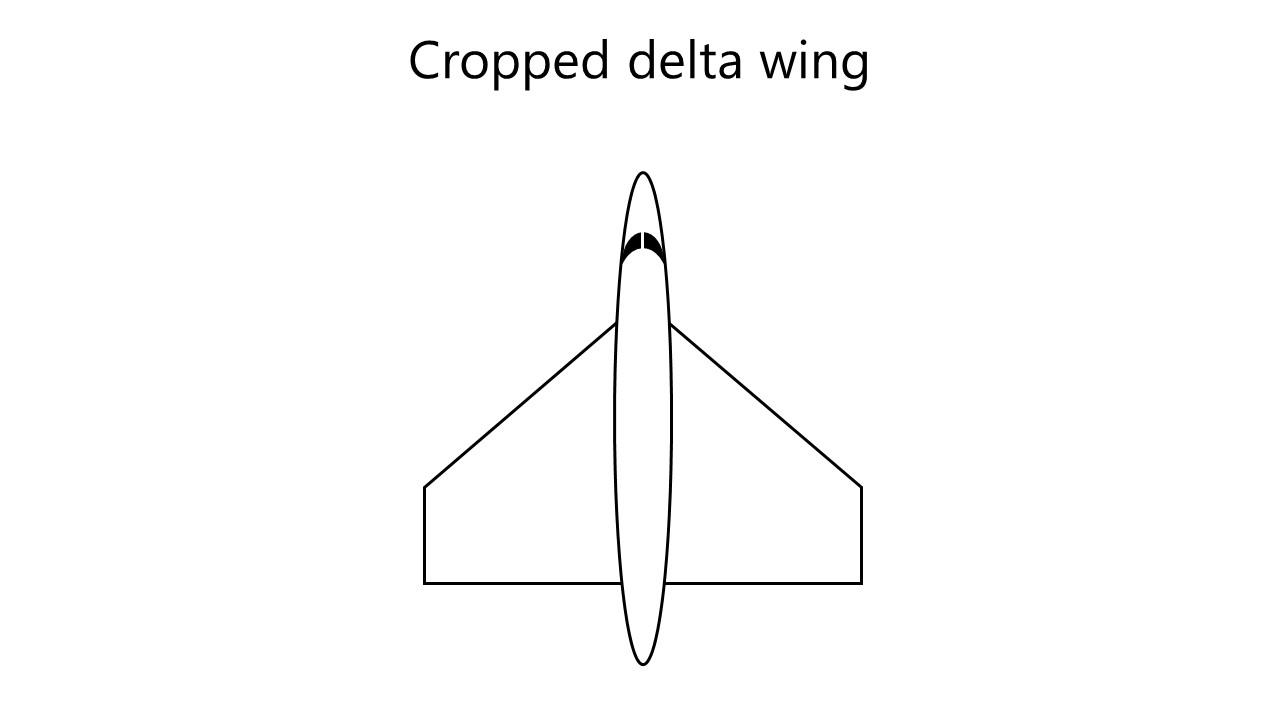
Cropped delta wings look like delta wings with blunt (cut off) tips.
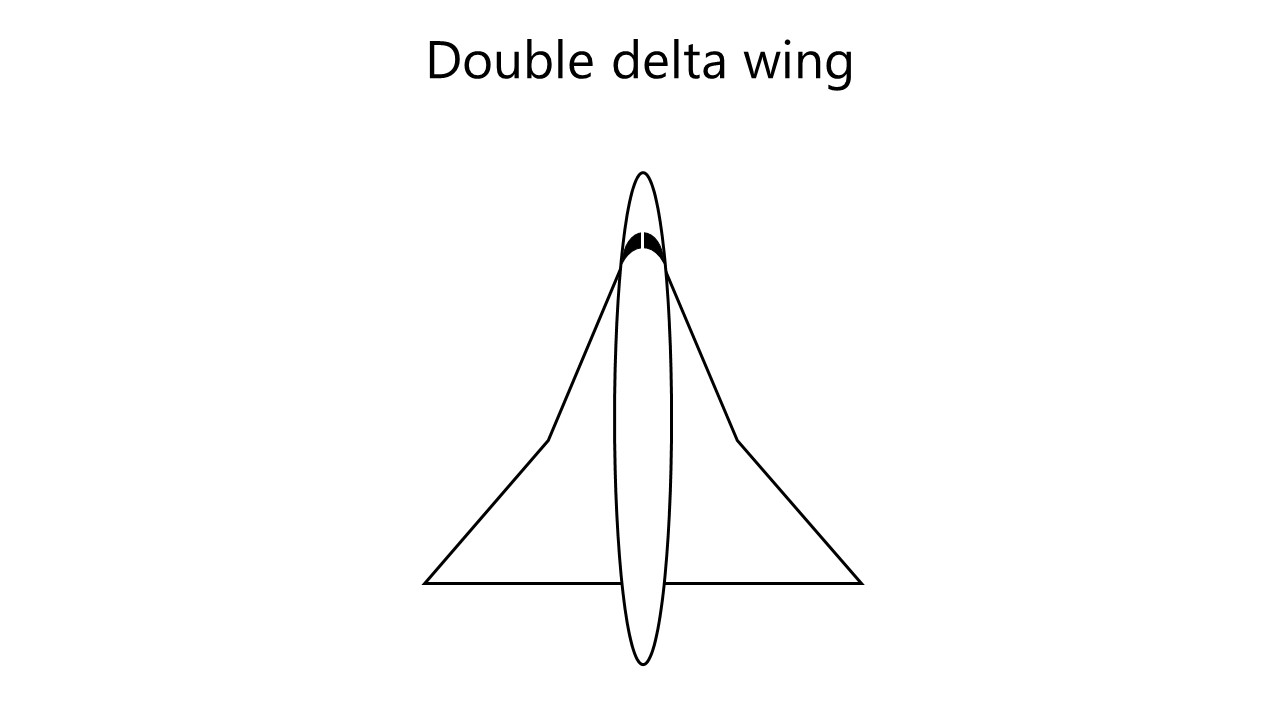
Compared to the true delta the double delta has different sweep angles on inner and outer wings.
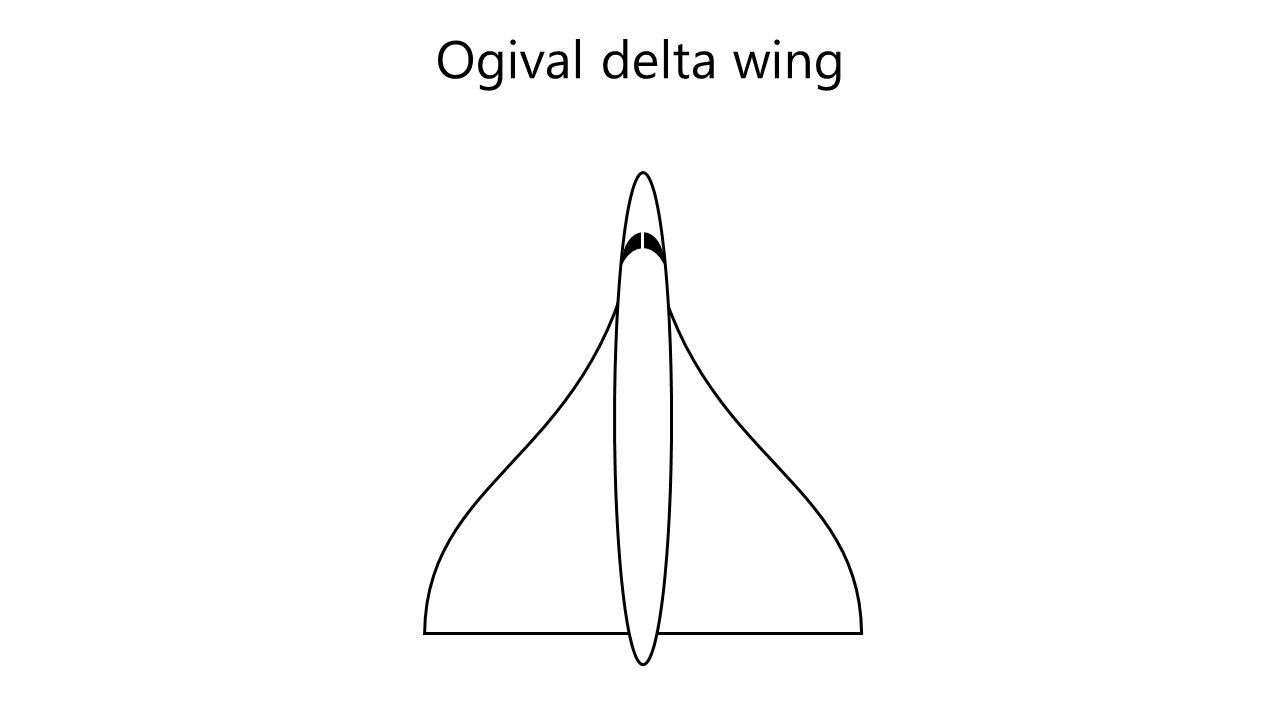
Delta wings with a curved leading edge, in an S-shape, are called ogival delta wings.
Wing attachments
Wings are attached to the fuselage in some way. The location of the wings with respect to the fuselage determines the configuration.
Also, the wings can be straight when seen from the front, of at an angle. This is called dihedral or anhedral, depending on the direction.
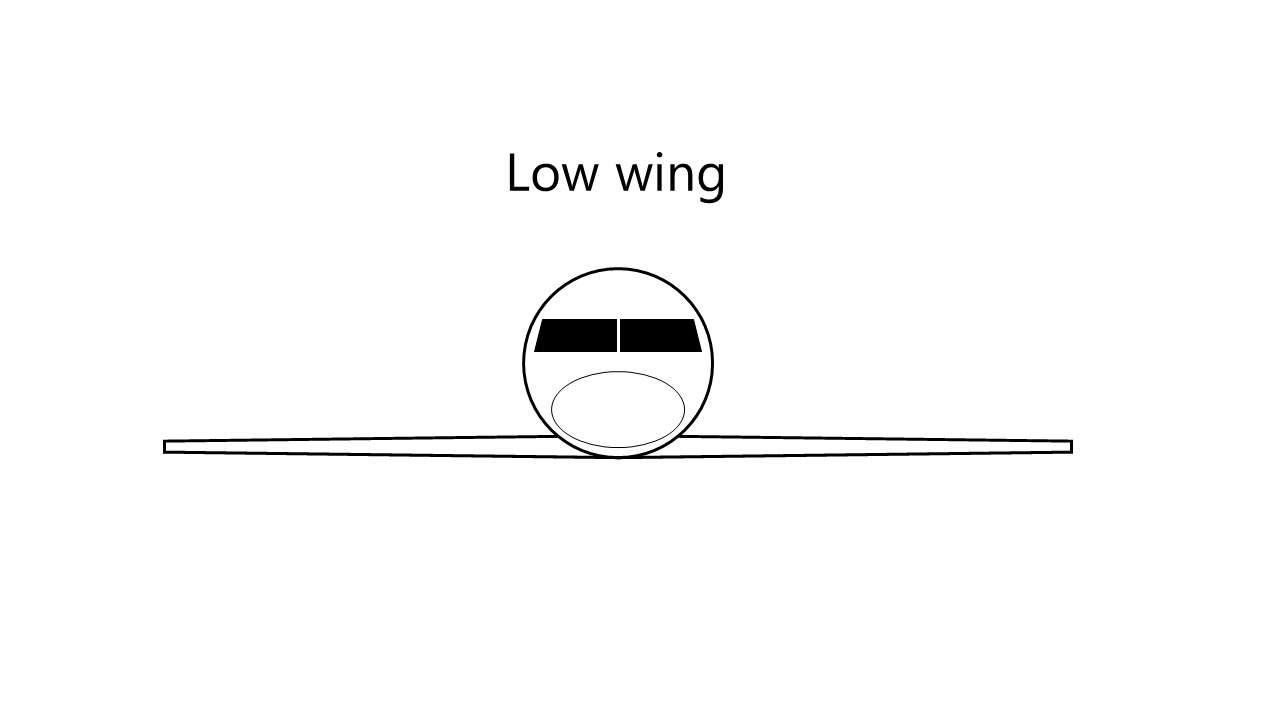
Low wings go through the bottom of the fuselage, or are attached to the underside.
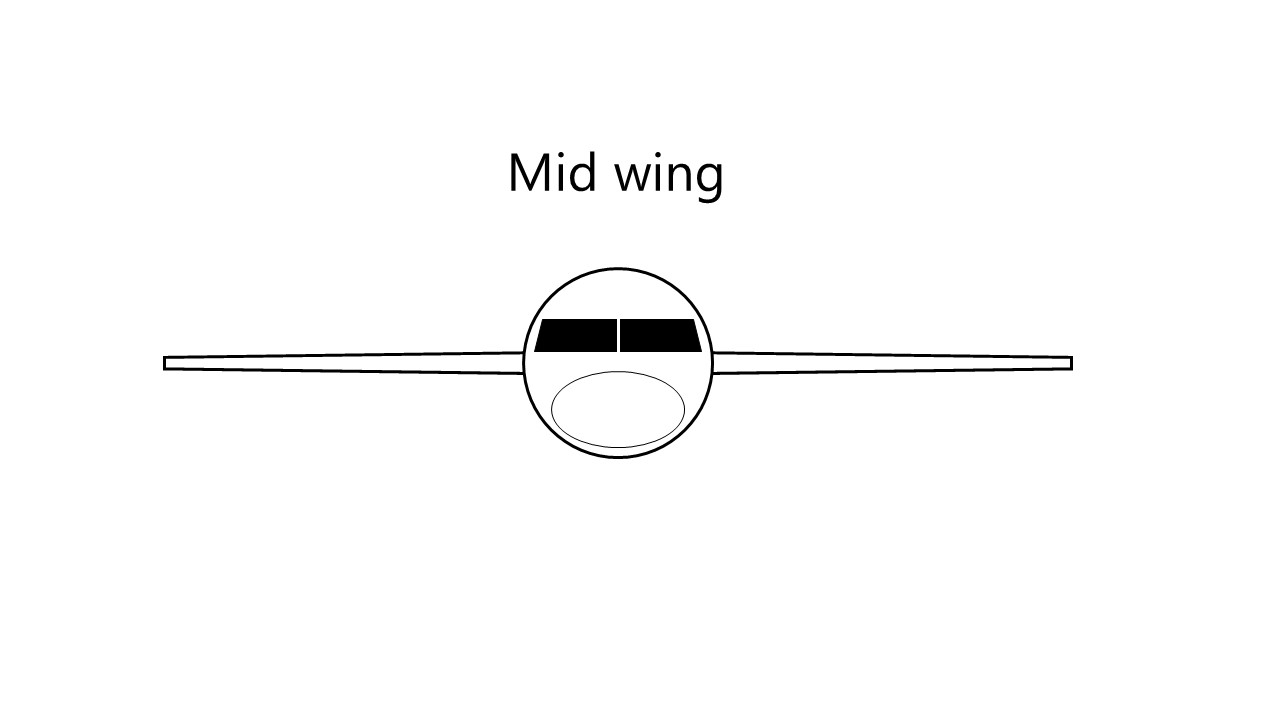
The mid-wing wings go through the fuselage, roughly in the middle.
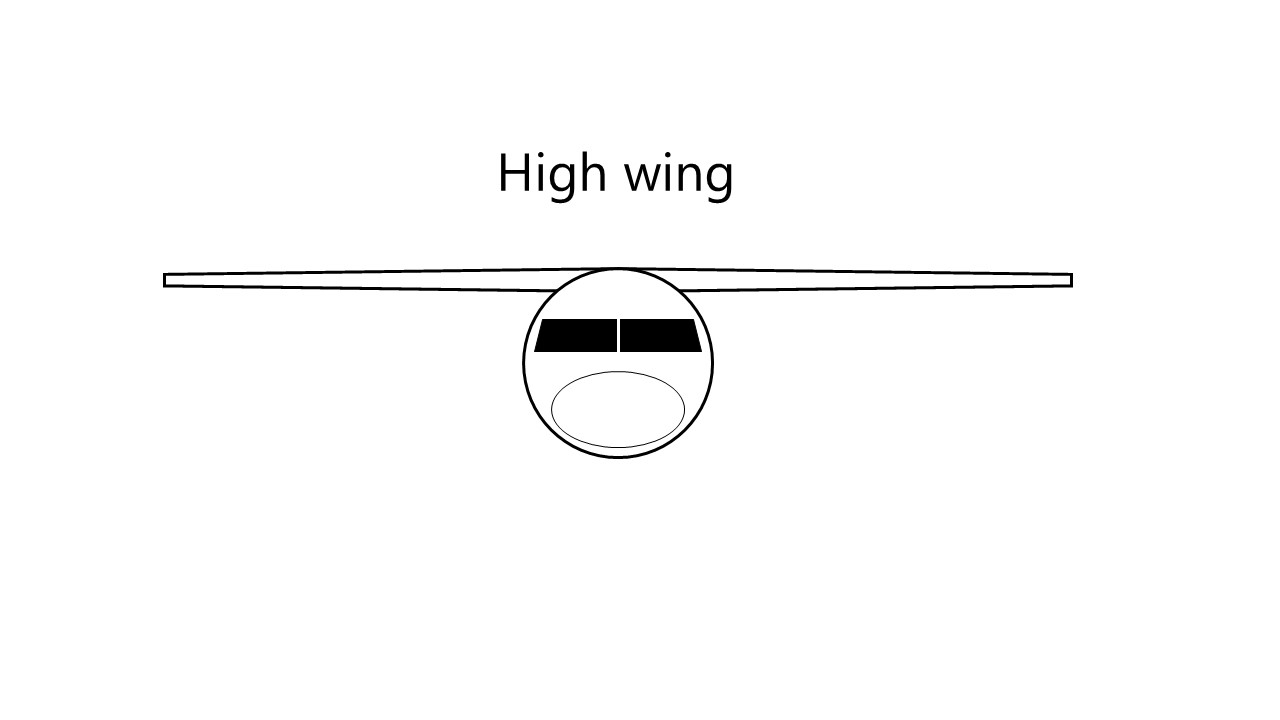
High wings go through the top of the fuselage, or are on top of it.
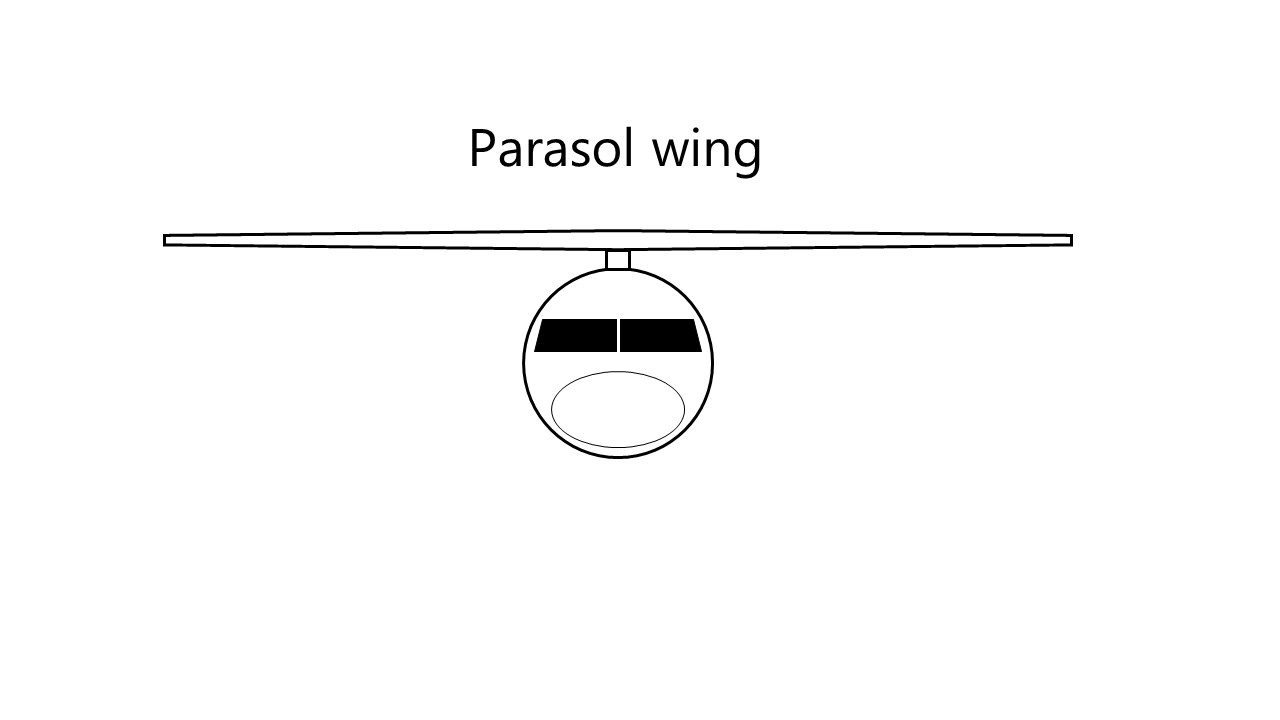
Parasol wings are attached to the fuselage via one of more pylons and or struts.
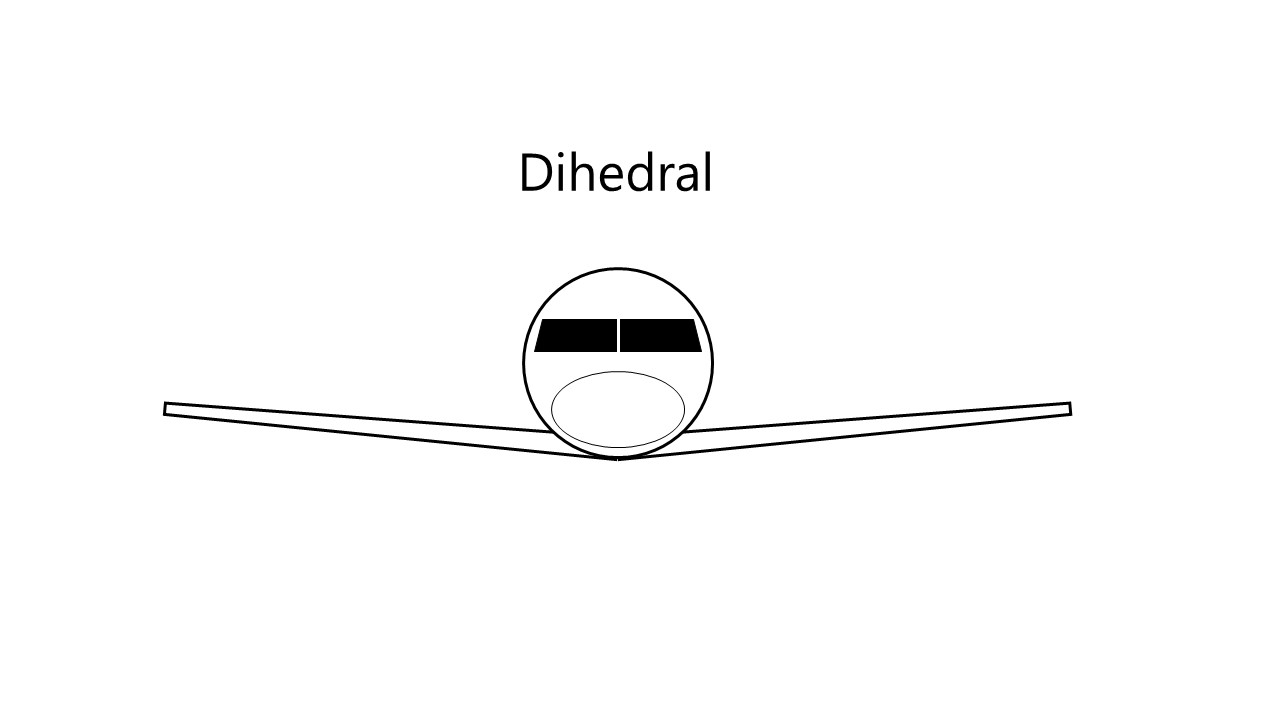
When wings have dihedral, they are in a V-shape.
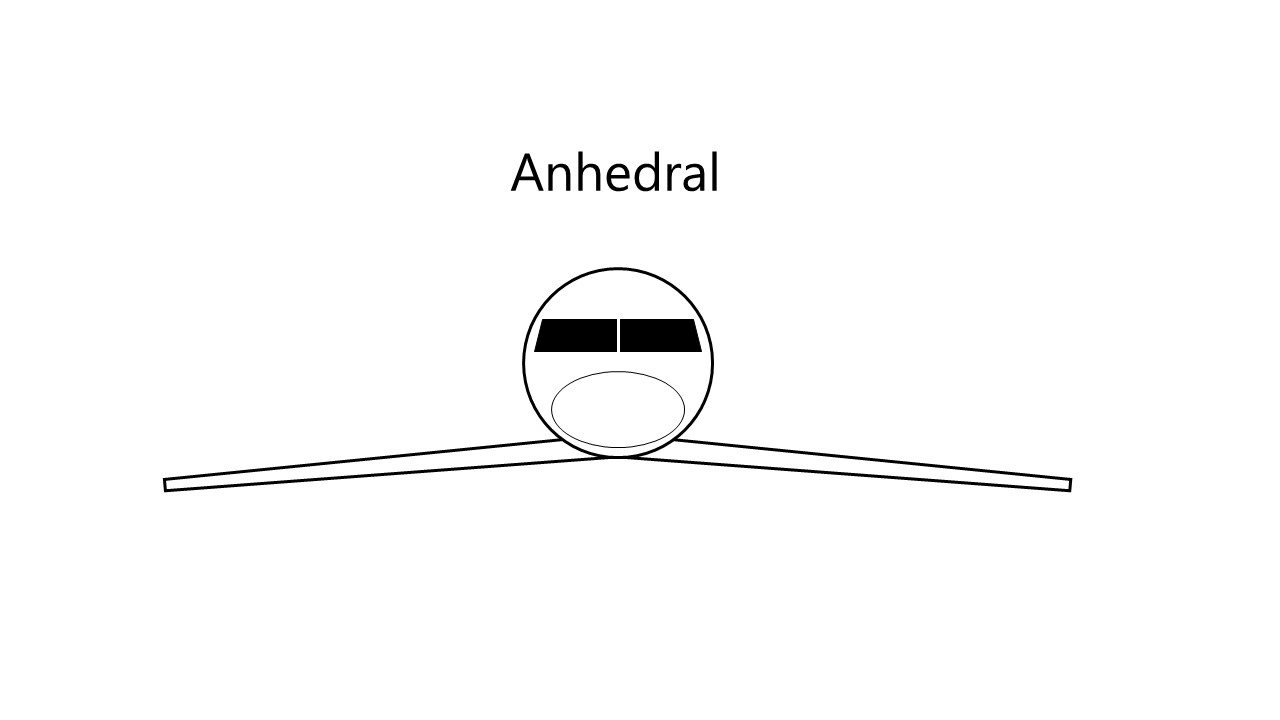
Anhedral wings hang down: the tips are lower than the roots.
Wings-Tailplanes-Foreplanes
Normal wings are unstable in pitch. Therefore, some form of horizontal stabilising surfaces are required. These can come in different shapes, in front of and behind the main wing. Here are some common configurations.
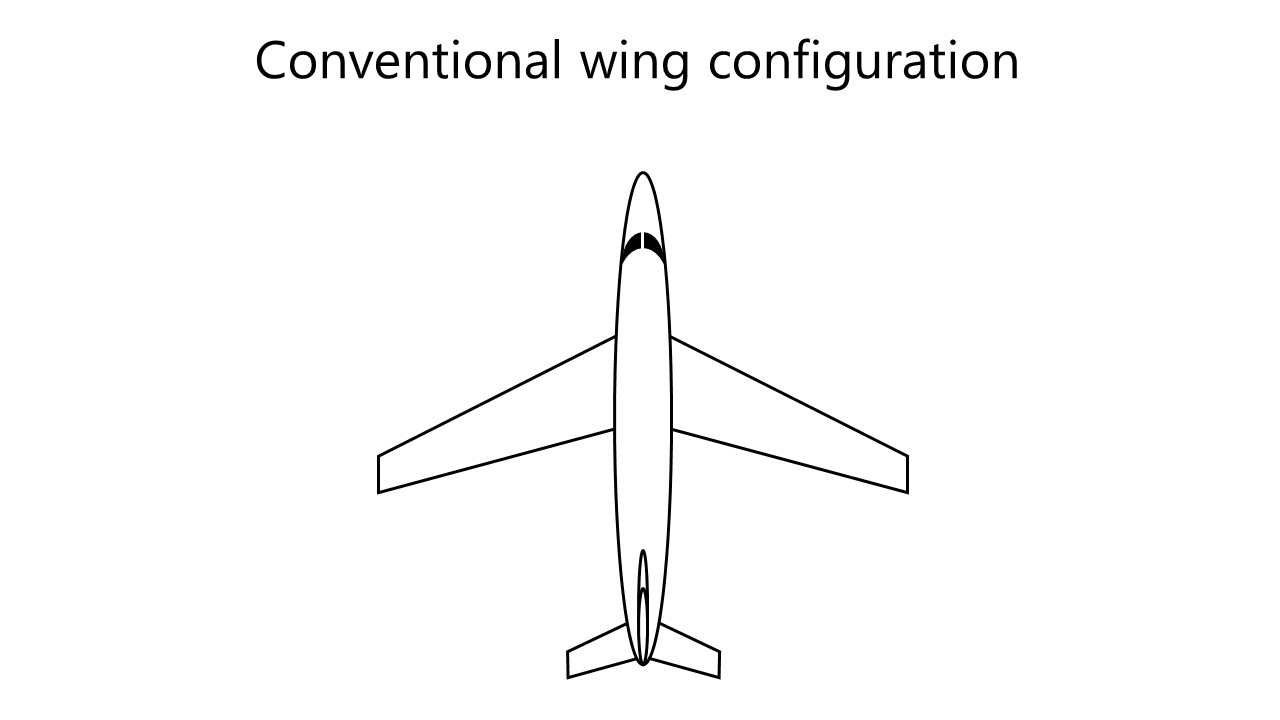
In most cases the horizontal stabilisers are at the rear of the aircraft, and therefore is is usually called the conventional configuration.
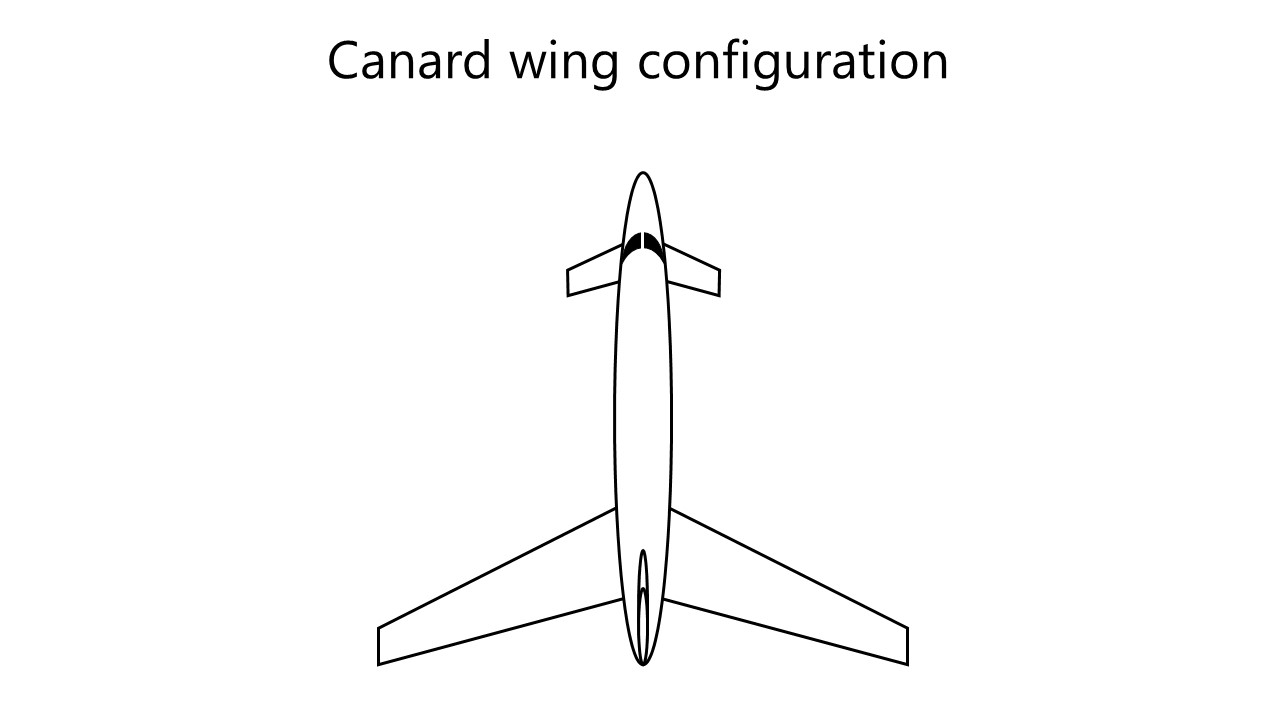
Ducks, called canard in French, have their wings close the rear. Hence, the configuration with stabilising surfaces at the front is called 'canard'.
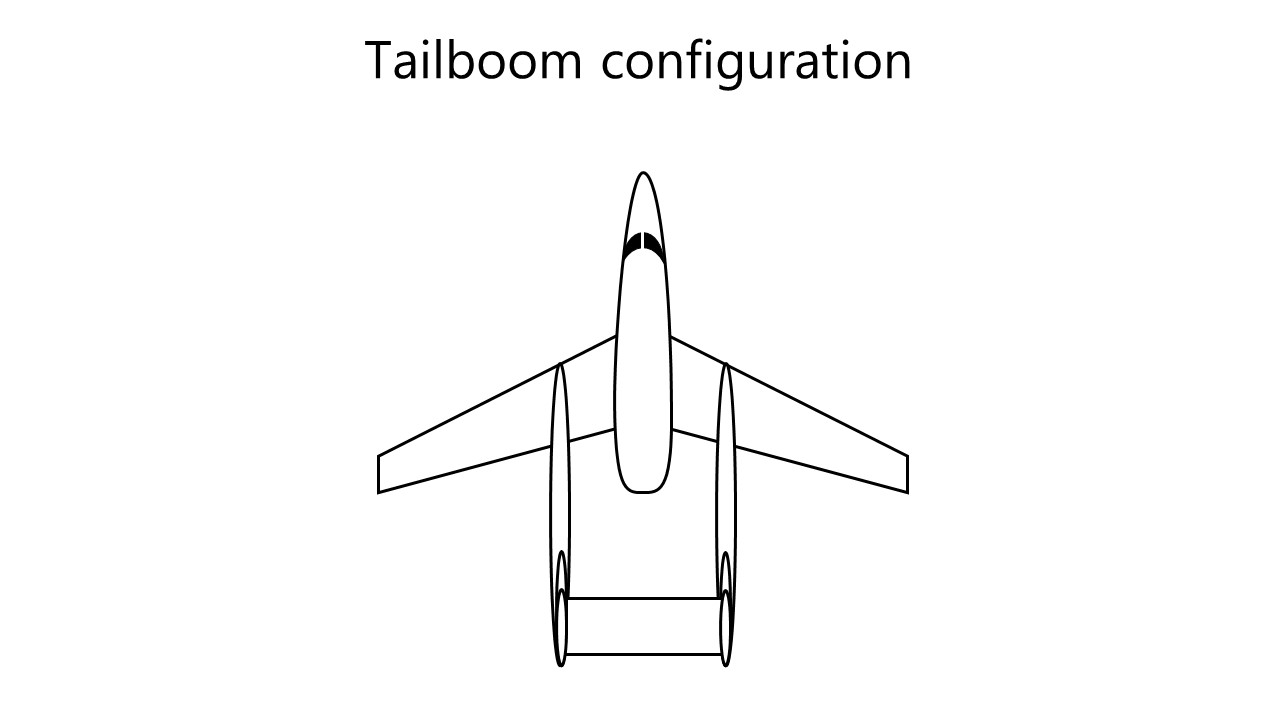
In some cases the tail surfaces are not attached to the fuselage, but to booms extending aft from the wings.

Airplanes may have both front and aft horizontal fins, so they have three surfaces in total (including the main wings).
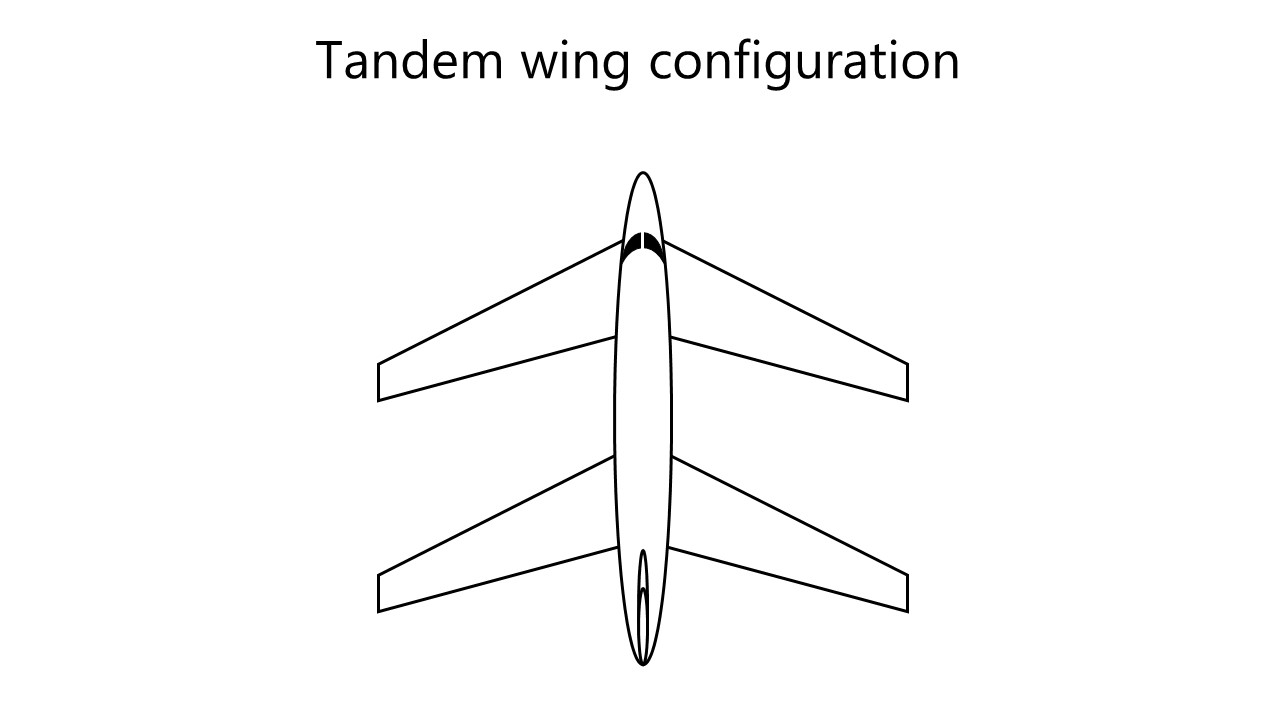
Contrary to the canard configuration, the tandem wing configuration has two more or less equally sized front and rear wings.
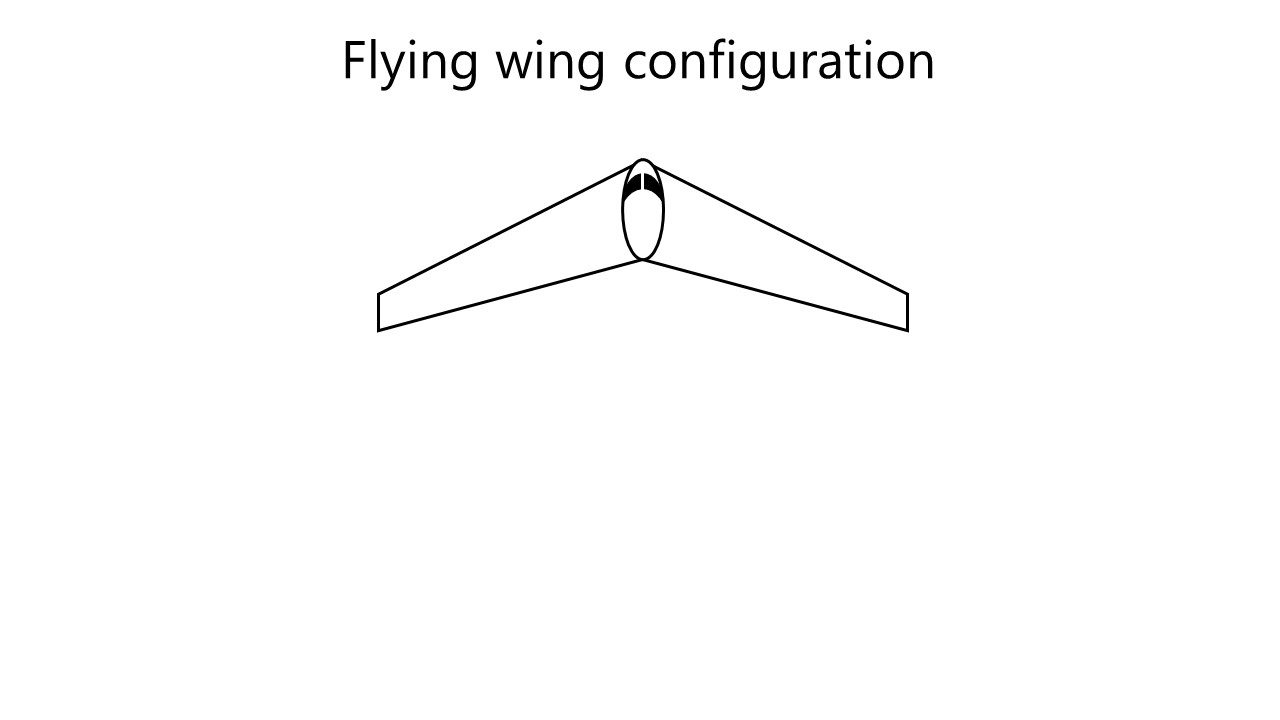
When there are no horizontal surfaces at all, except the wings, the configuration is called the 'flying wing'.
Tailplane configurations
Airplanes with a conventional wing configuration or three surface configuration (see above) have a combination of one or more horizontal stabilisers and vertical stabilisers. The most common are tail configurations with a single vertical stabiliser attached to the rear fuselage and horizontal stabilisers on the left and right side. They can be identified by the location of the horizontal stabilisers:
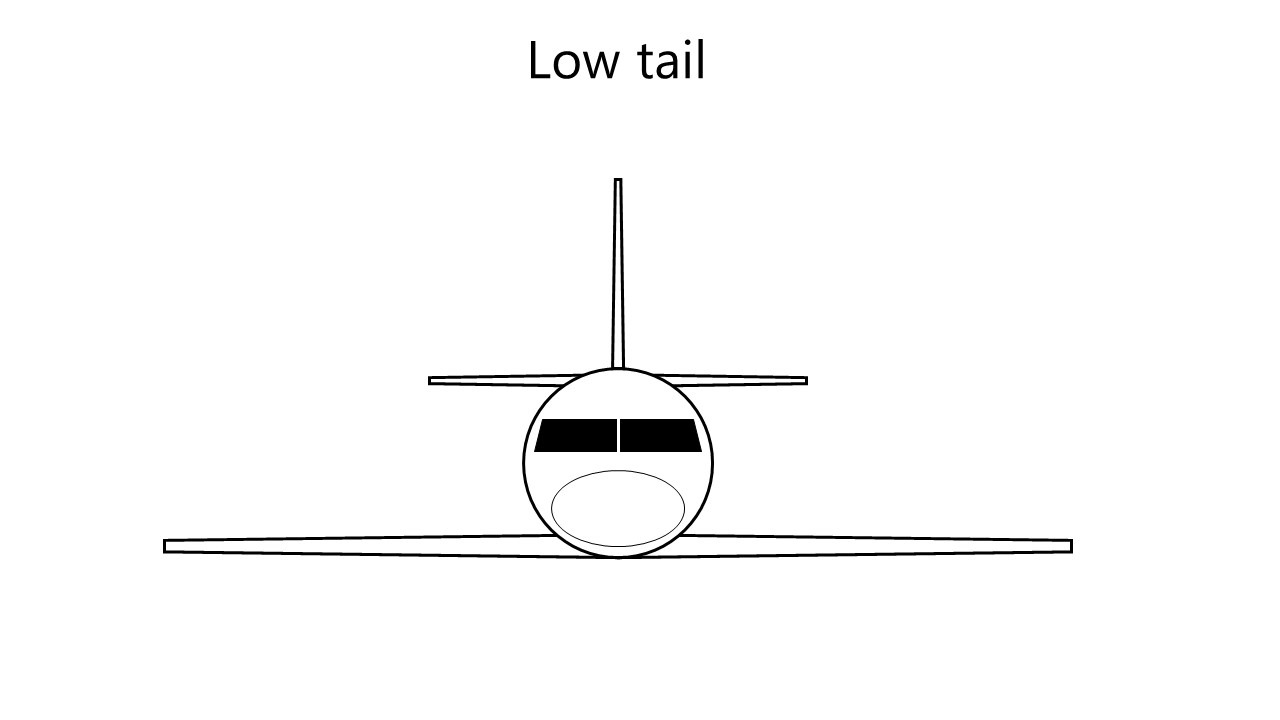
Low: horizontal stabilisers are attached to rear fuselage.
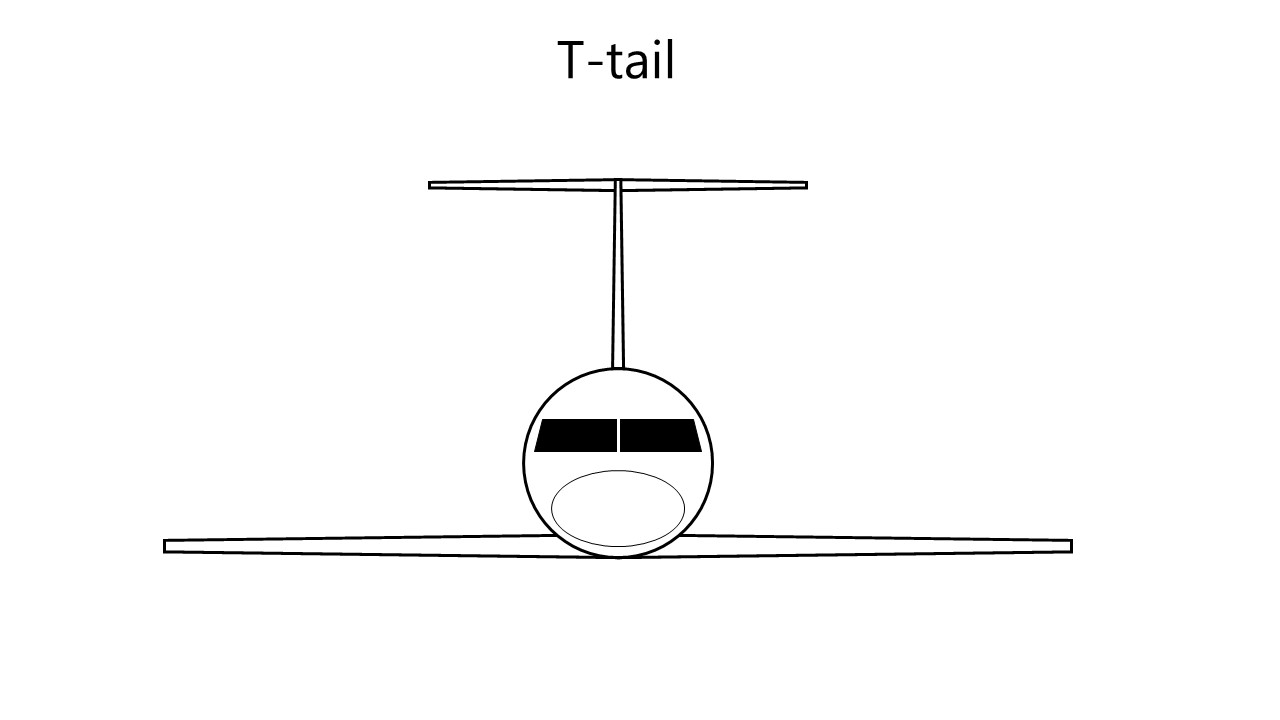
T-tail: horizontal stabilisers are attached at or just below the top of vertical stabiliser.
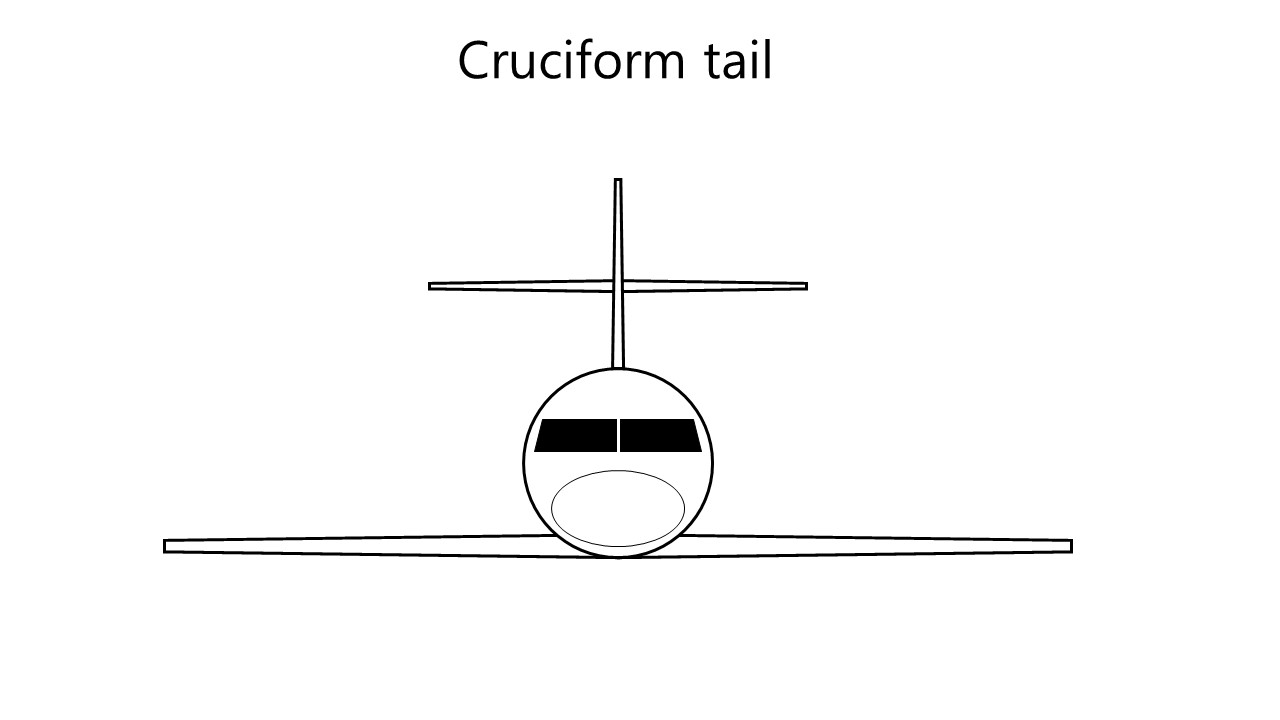
Cruciform: horizontal stabilisers are attached to vertical stabiliser in between fuselage and top.
There are also tail configurations with multiple vertical stabilisers.

Double tail: two vertical stabilisers attached to the fuselage.
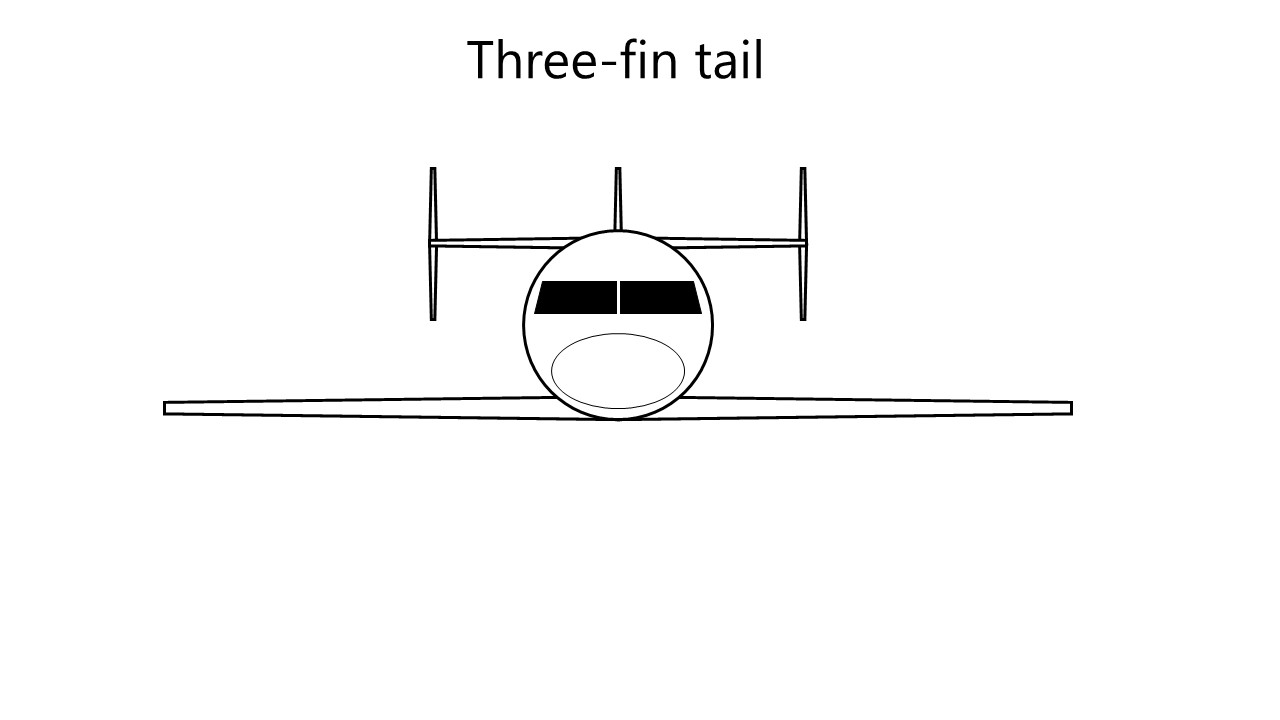
Three-fin tail: two vertical stabilisers attached at the ends of the horizontal stabilisers, and one in the middle.
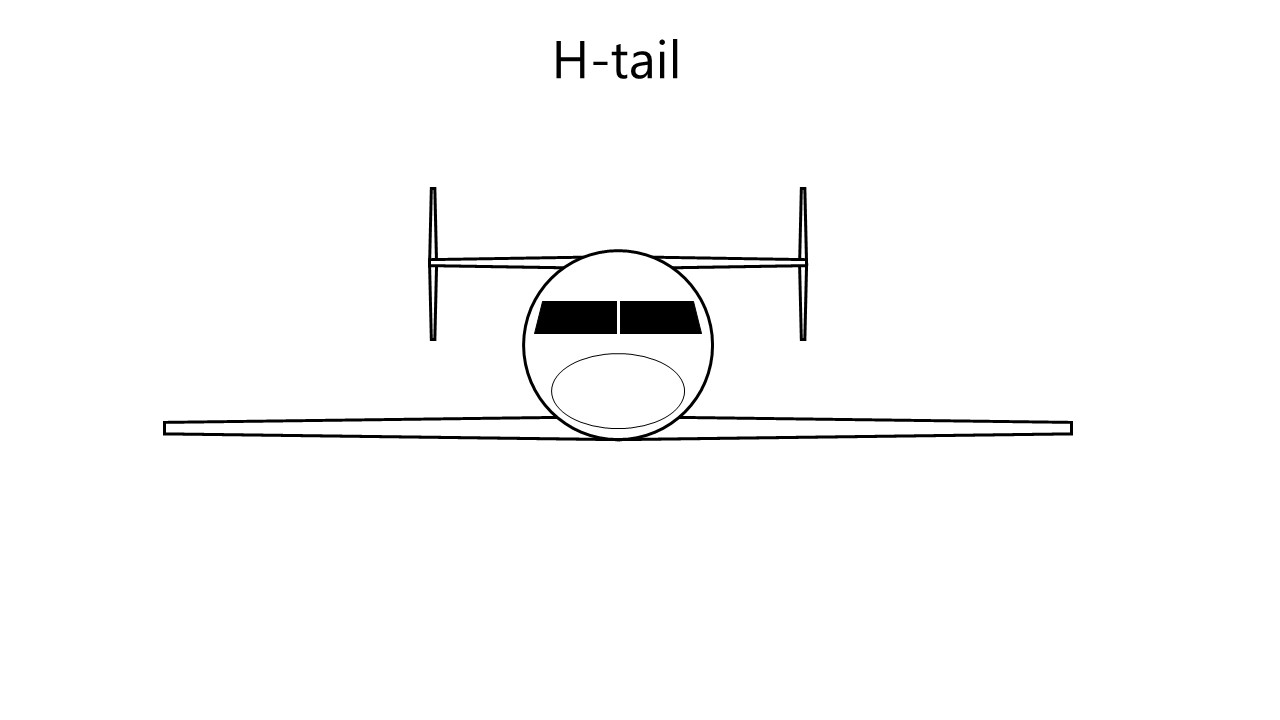
H-tail: two vertical stabilisers attached at the ends of the horizontal stabilisers.
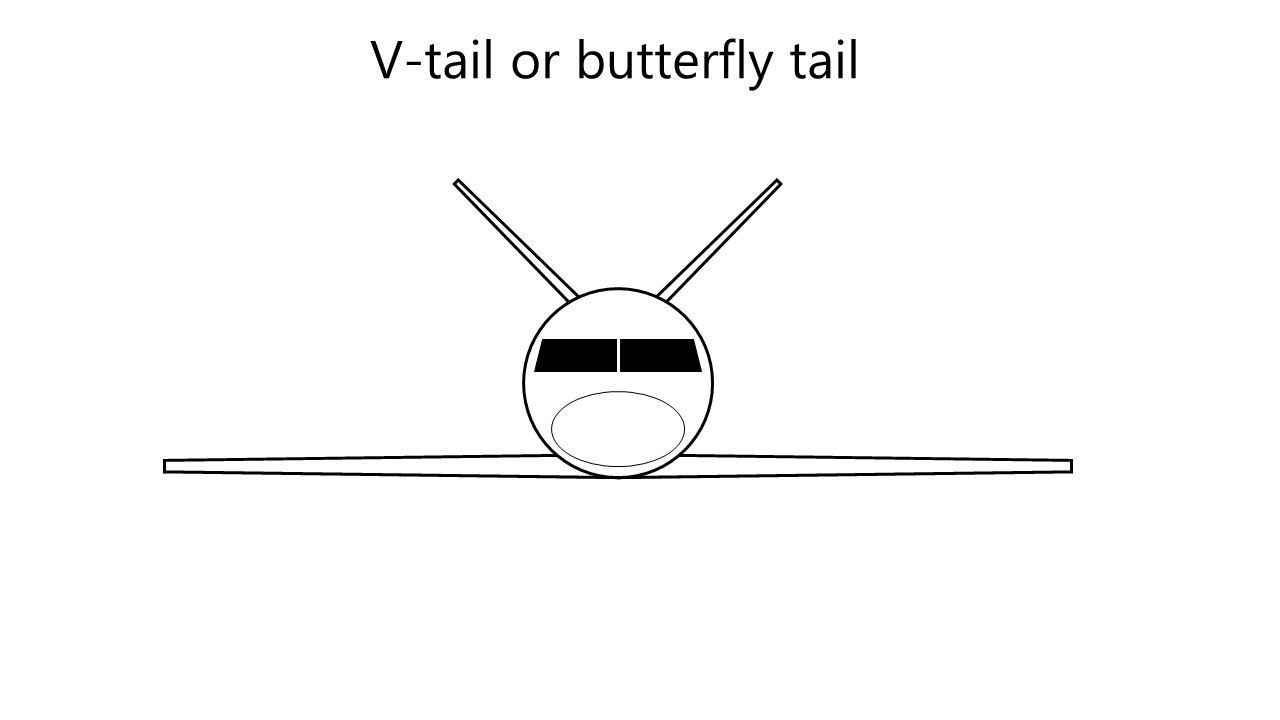
With a butterfly tail or V-tail the horizontal and vertical stabilisers are combined.
When the airplane has a non-standard wing configuration, the vertical stabiliser(s) may be at a whole different location, such as the wing tips. Note the difference with winglets; winglets are smaller than fin tips.
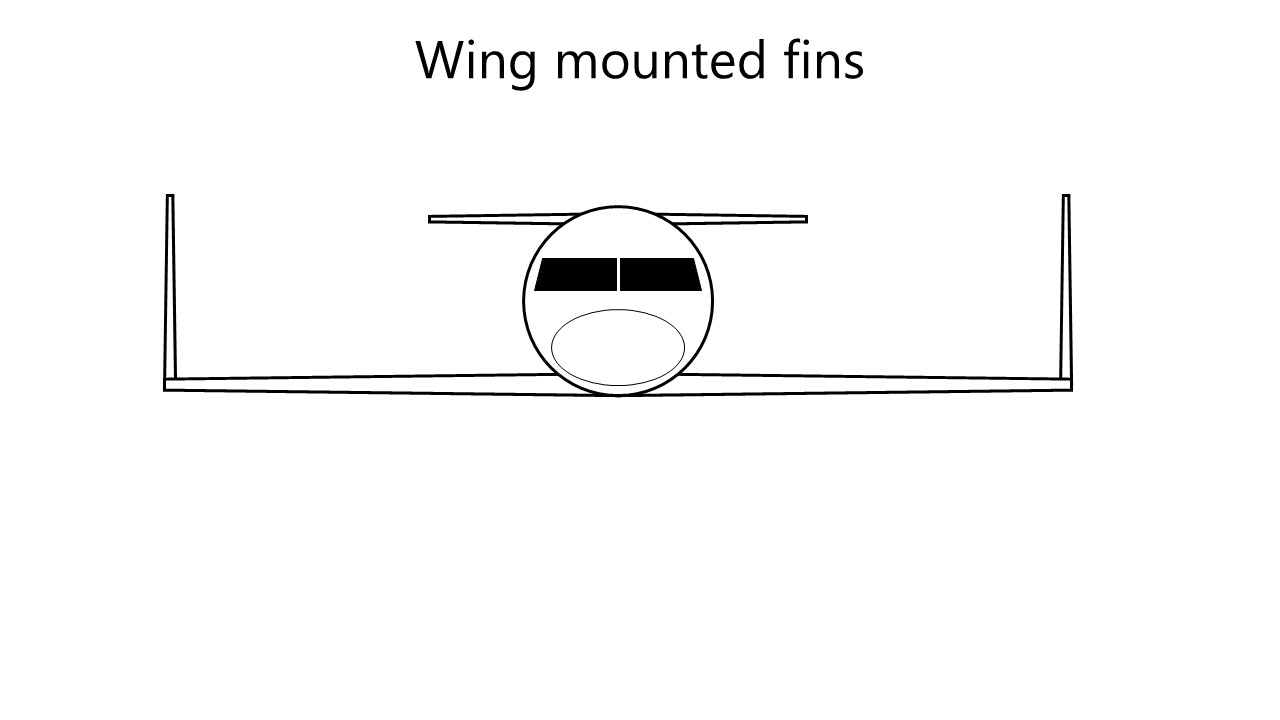
Landing gear configurations
Most airplanes have wheels to land on the earth's surface again. This landing gear can be fixed or (partially) retractable. The landing gear consists of two or more main landing gears and some form of support gear(s). This makes the landing gear configuration. There are three main configurations:
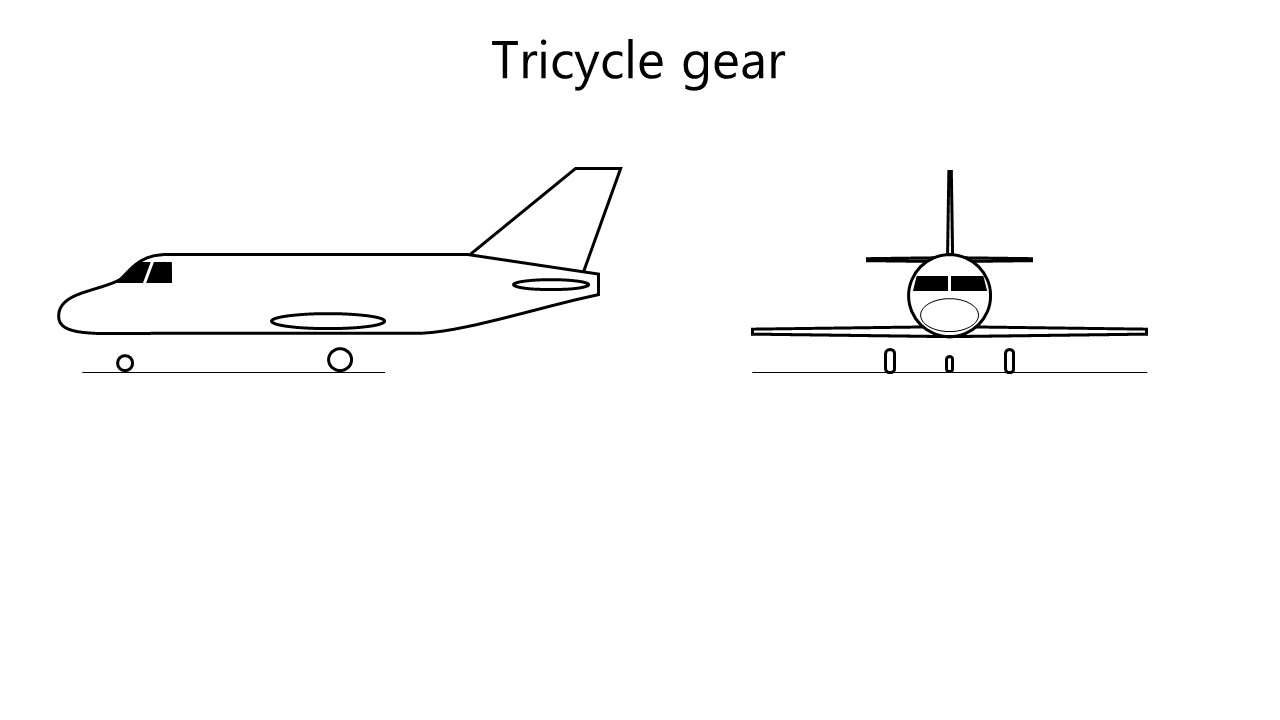
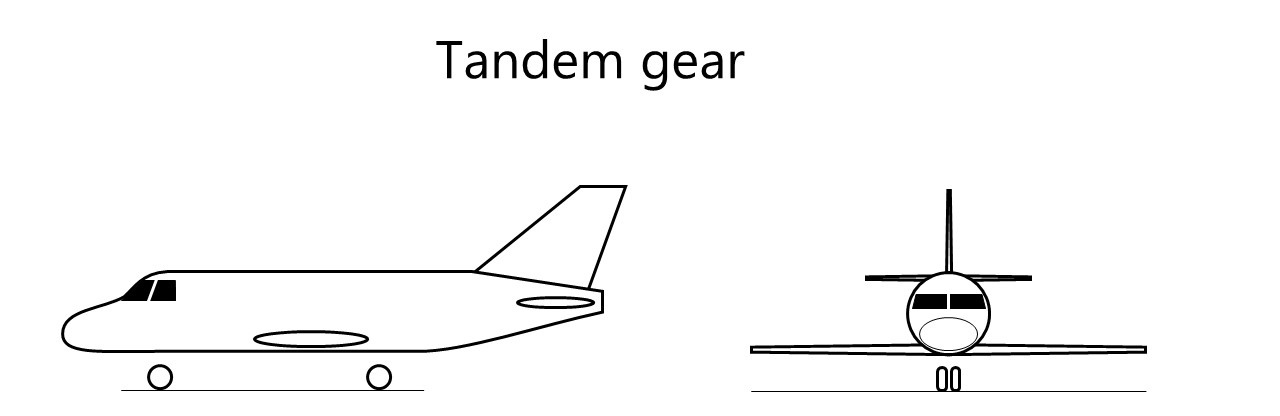
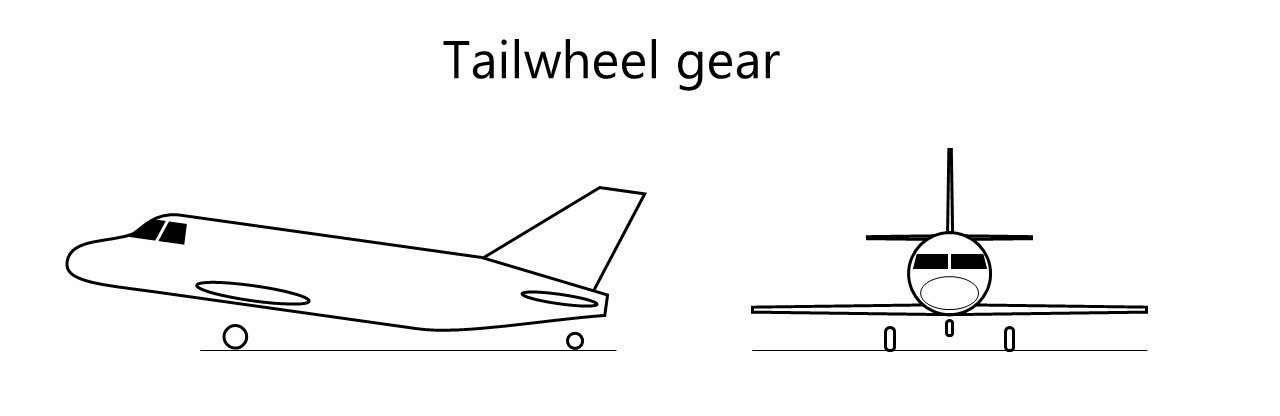
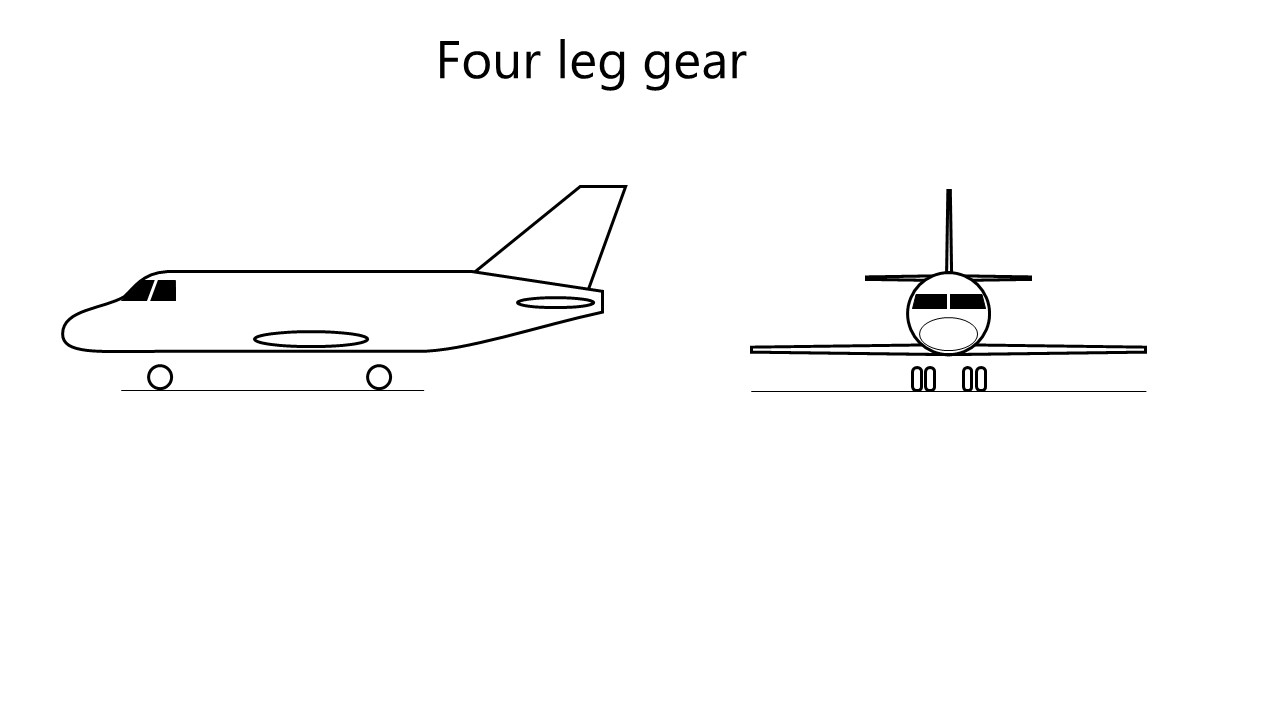
Airplanes can also have a non-wheeled gear. In many cases this means floats, to landing on water, or skis, to land on snow and ice. With floats you can have a boat-shaped fuselage and stabilising floats under the wings, or double floats. There are no specific names for these configurations. The skis are usually in the same place as the wheels, so the configuration naming is maintained.
Helicopter rotor configurations
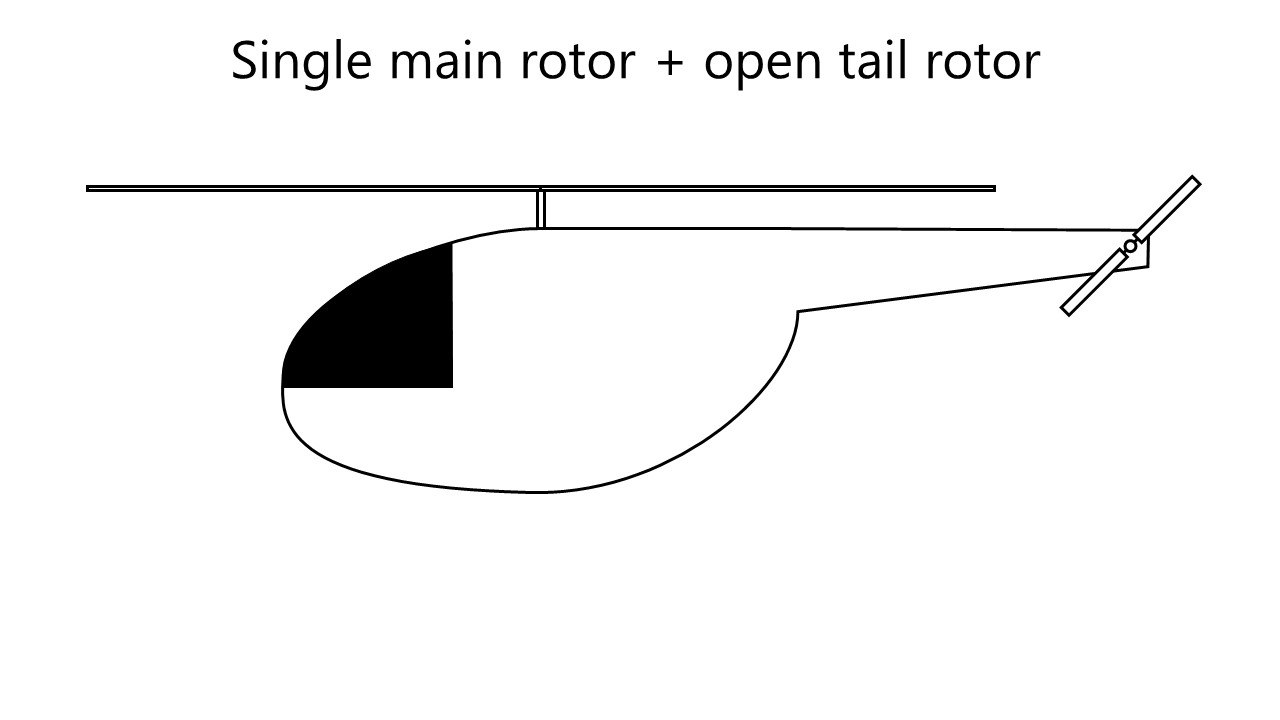
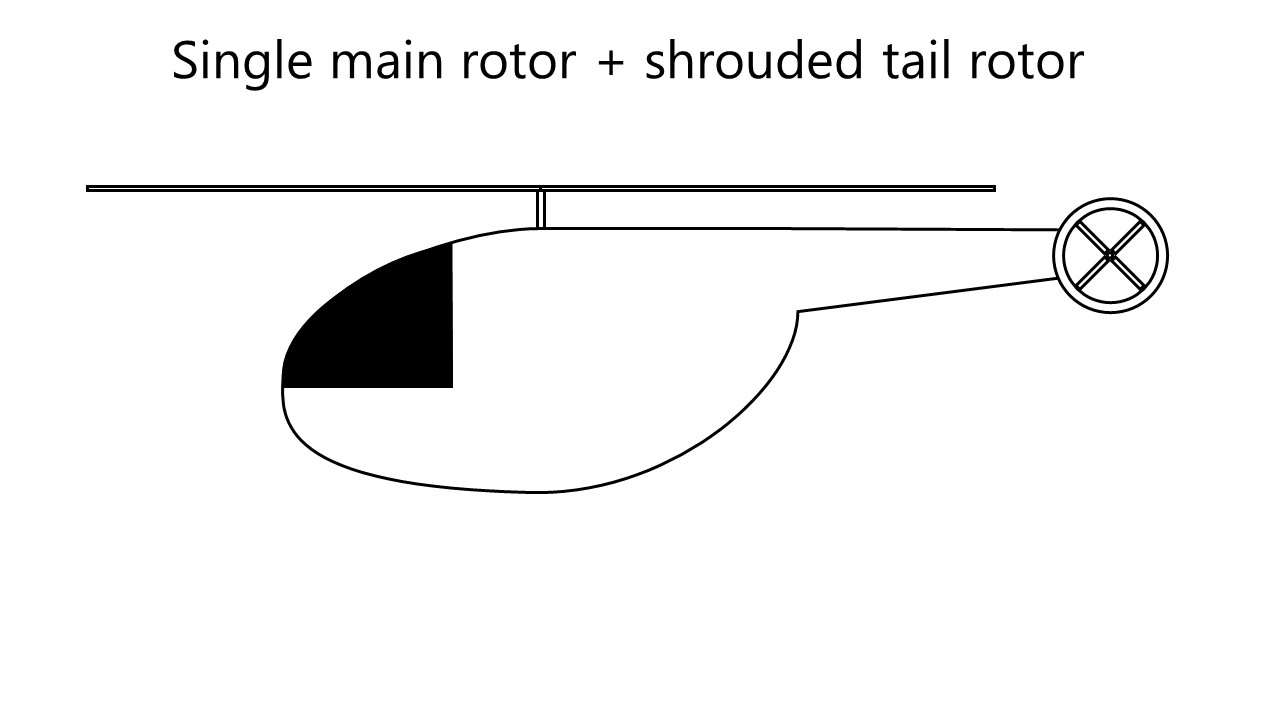
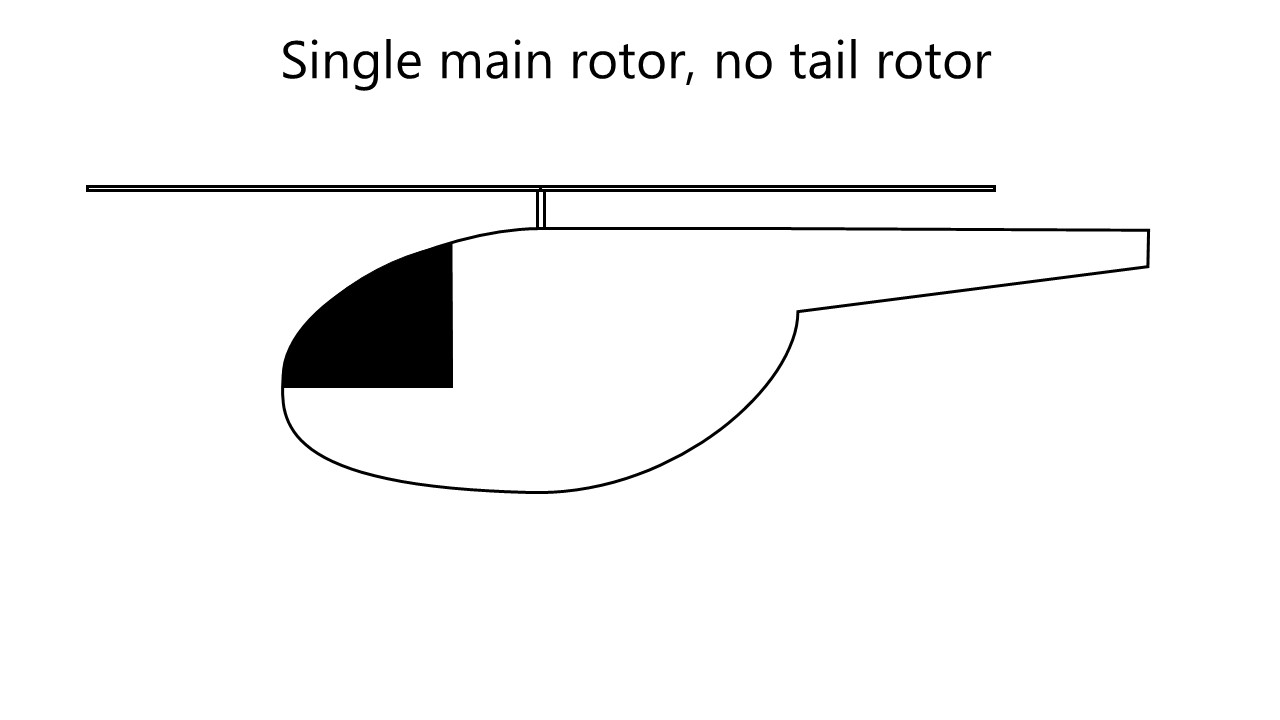
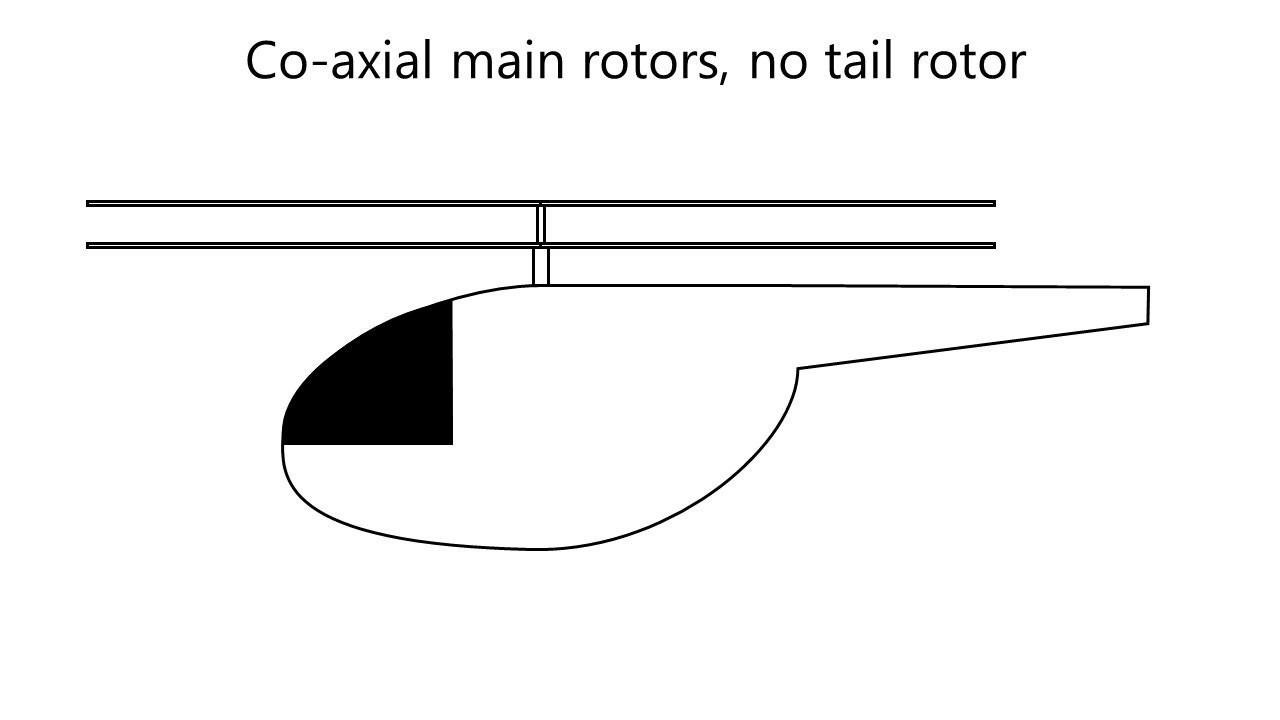
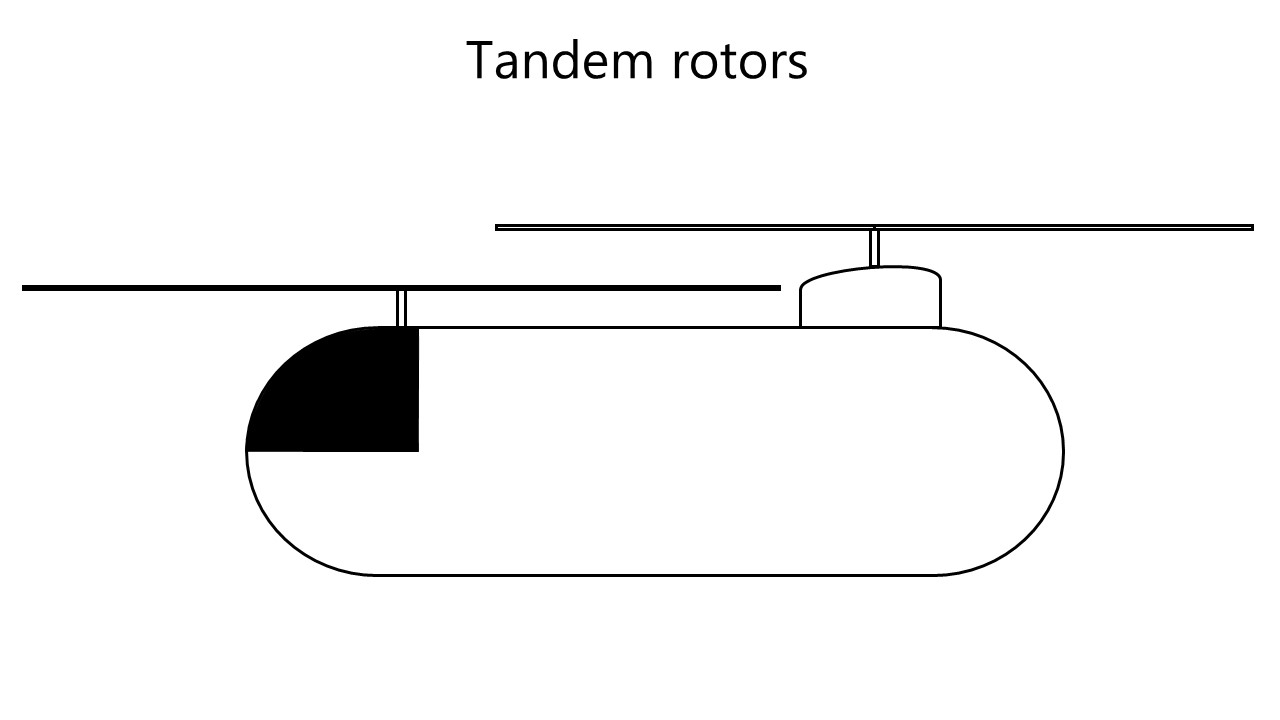
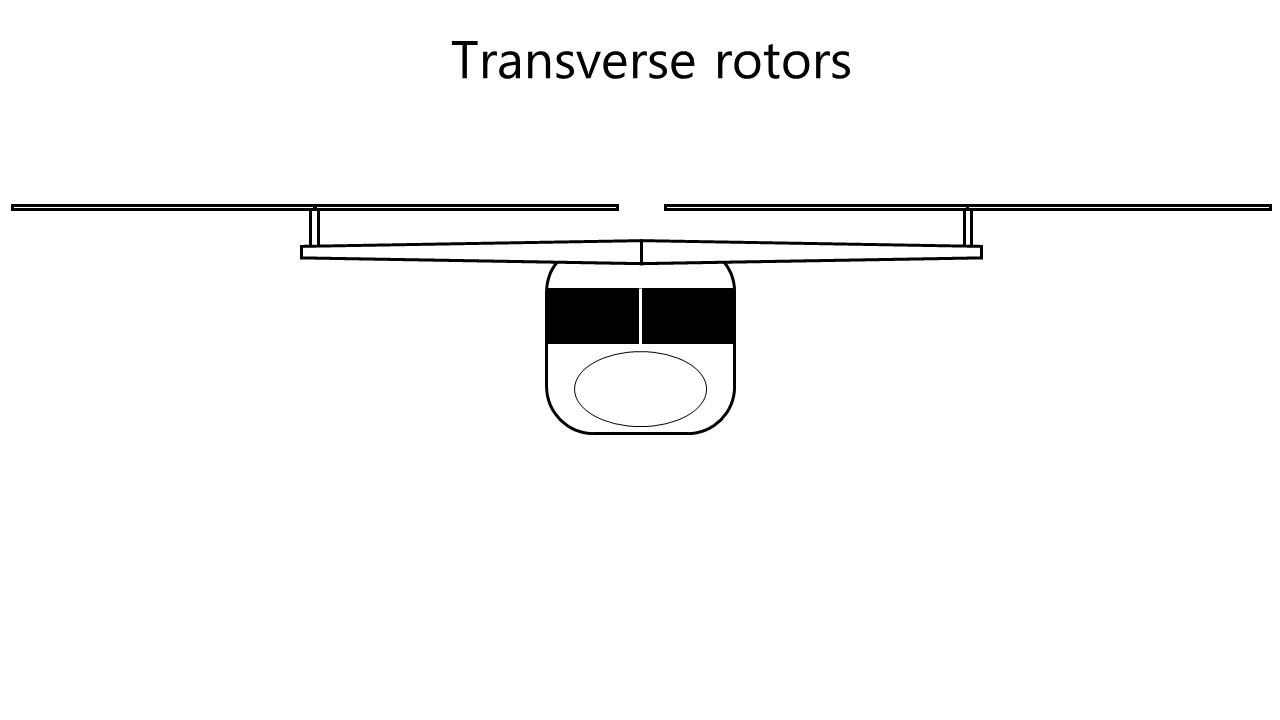
Conventional helicopters can have several ways to compensate for the torque force caused by the main rotor. This force wants to make the fuselage turn around the rotor axis. We distinguish configurations with a single main rotor with and without a tail rotor, and with two equally sized (main) rotors:

Naming of aircraft parts
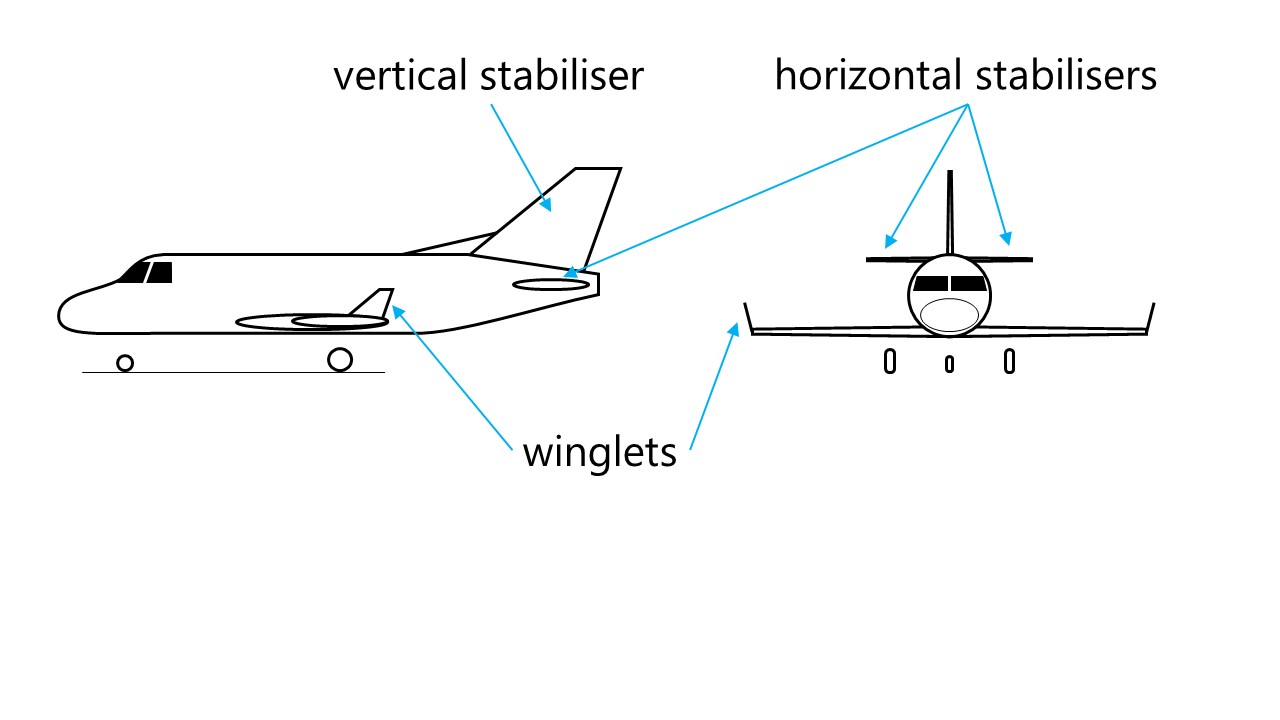
Most of you probably know what the most common parts of an aircraft are called, such as the fuselage and the wings. Other parts may be unknown to you. Here are some definitions of airplane and helicopter components that you can encounter on this website.