
GippsAero Airvan
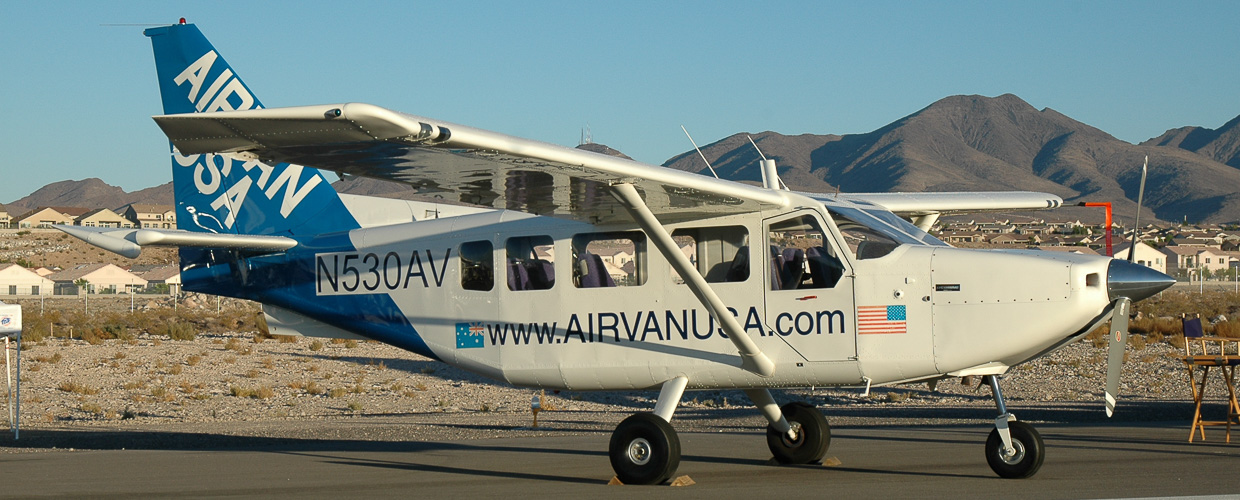
Australian company Gippsland Aeronautics, later abbreviated to GippsAero, saw a market for a rugged small airplane in between the Cessna 206 and 208. This Airvan was especially meant for the large 'outback' in Australia, and other areas in the world with a simple infrastructure. It has a square fuselage with big, slightly rounded rectangular cabin windows. The Airvan's wings have some dihedral and a single strut as brace. The tail is nearly triangular and has a dent in the trailing edge of the vertical stabiliser. In front is a triangular dorsal fin, and below the rear fuselage a small ventral fin. The Airvan has a fixed landing gear with all single wheels.
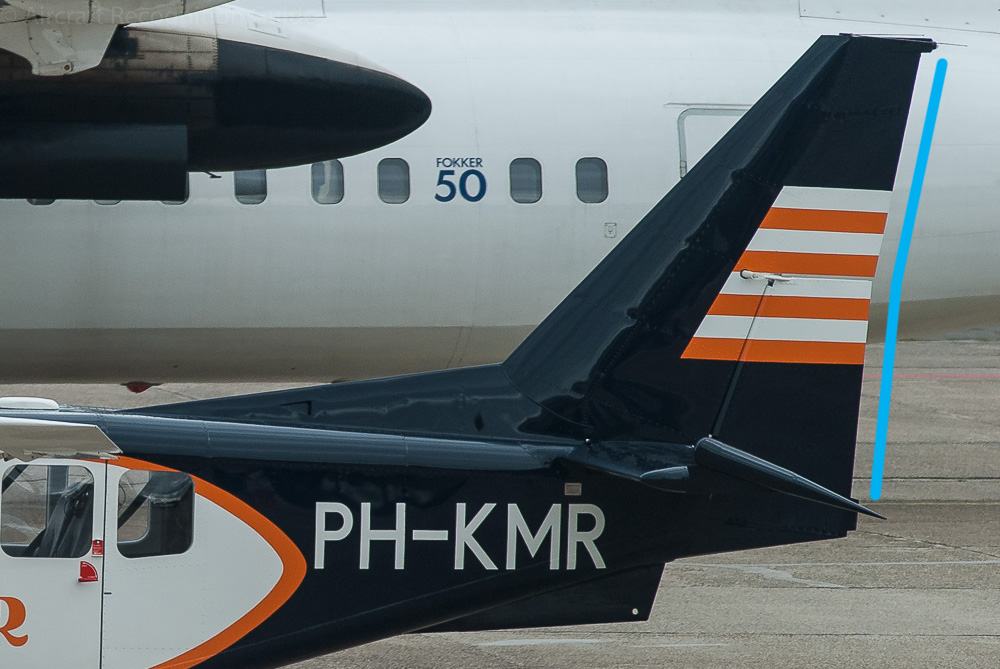
The vertical stabiliser of the Gippsland Arivan is one of the best recognition points: it is nearly triangular and has a small dent in the trailing edge.
How to recognise the different versions of the Airvan
The different versions of the Gippsland Airvan can be identified by
- the number of blades on the prop
- the shape of the nose/cowling
- the length of the fuselage
GA8 Airvan
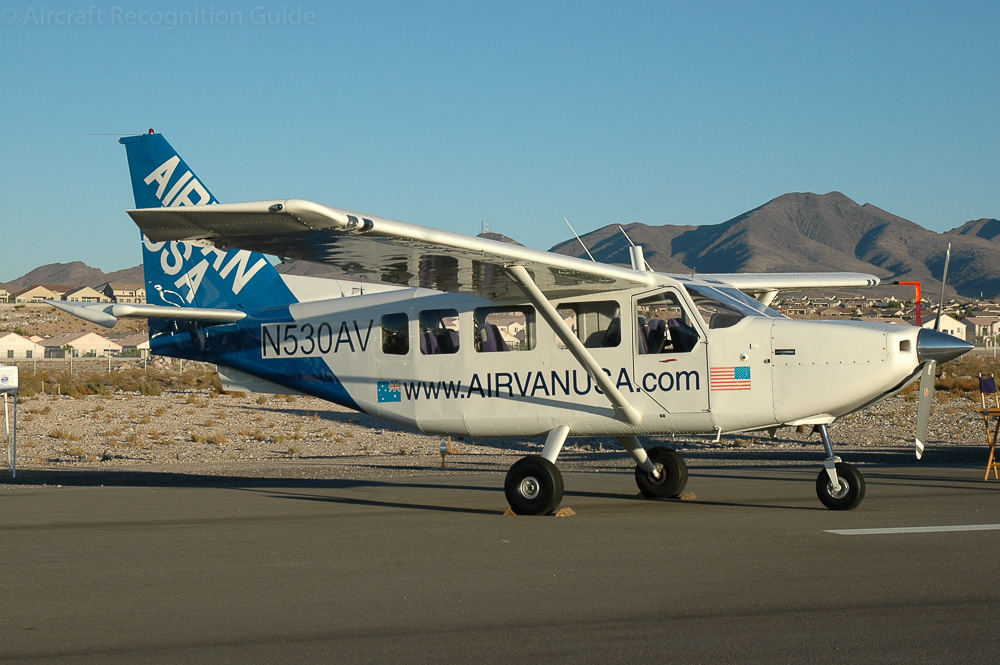
This is the original version. The standard GA8 has a piston engine driving a two-blade prop. The aircraft was at first simply known as Airvan, but when Mahindra Group took over and introduced the Airvan 10, it was marketed as Mahindra Airvan 8.
GA8-TC320
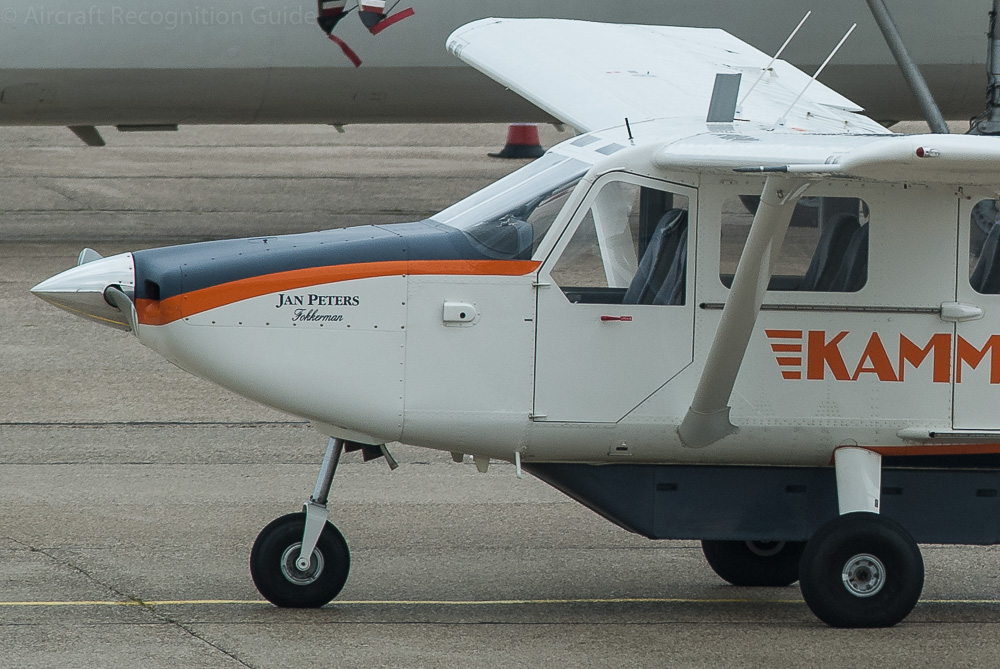
Similar in appearance to the GA8, but the turbocharged engine drives a three-bladed prop, which is thus the best way to recognise it. The nose is a bit less streamlined due to the air intake for the turbo charger below the prop spinner.
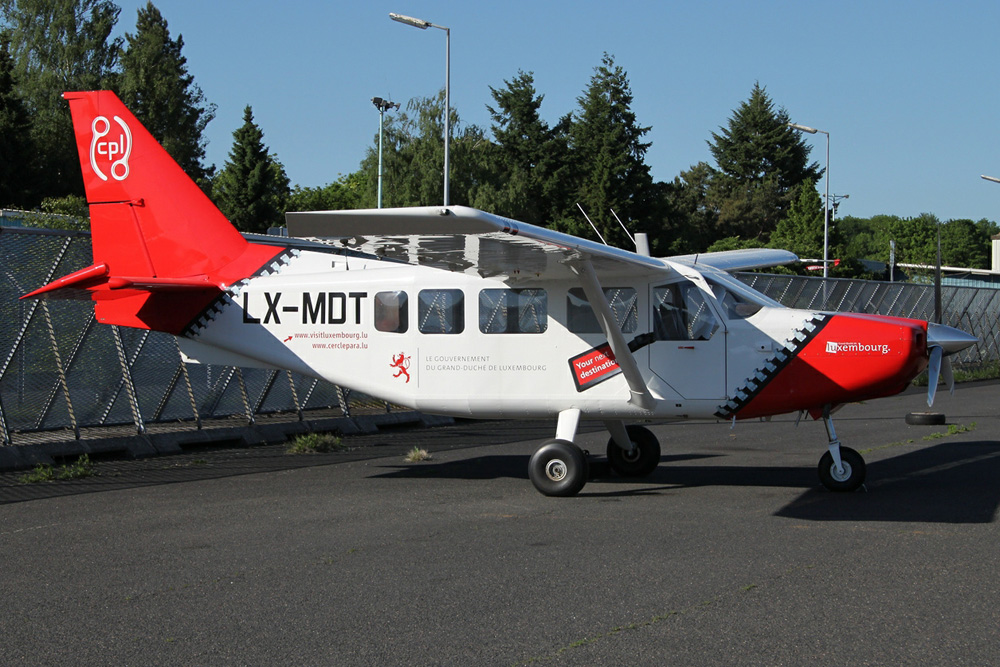
Thanks to the turbo charger the nose of the GA8-TC320 is slightly less streamlined than that of the standard GA8. (photo: Peter Bakema/WikiMedia)
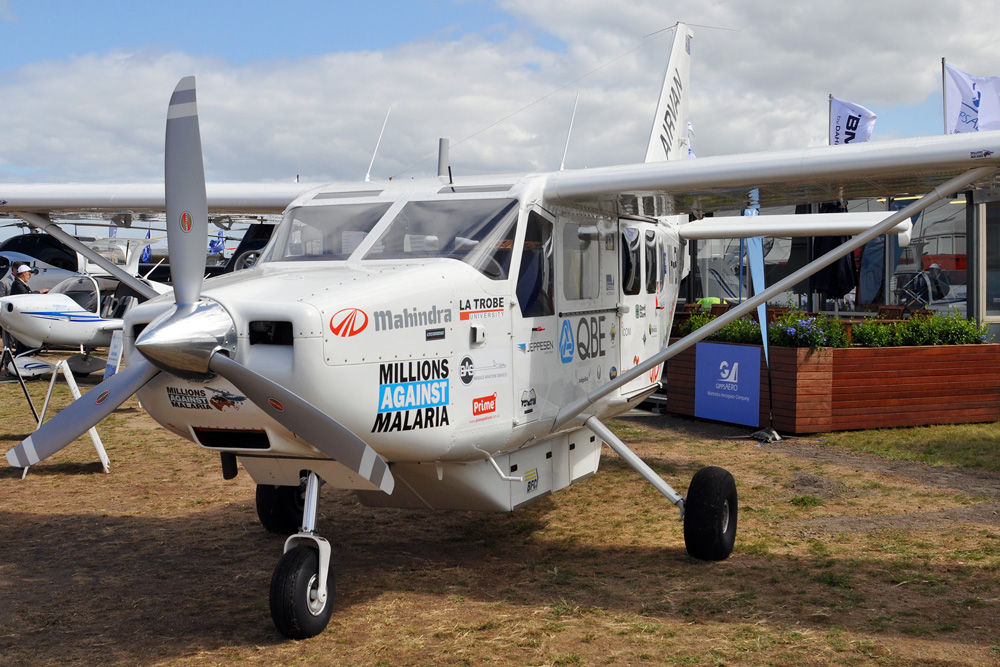
This front view better shows the three-bladed prop of the GA8-TC320, and the intake for the turbo charger, below the spinner. (photo: Robert Frola/WikiMedia)
GA10 Airvan 10
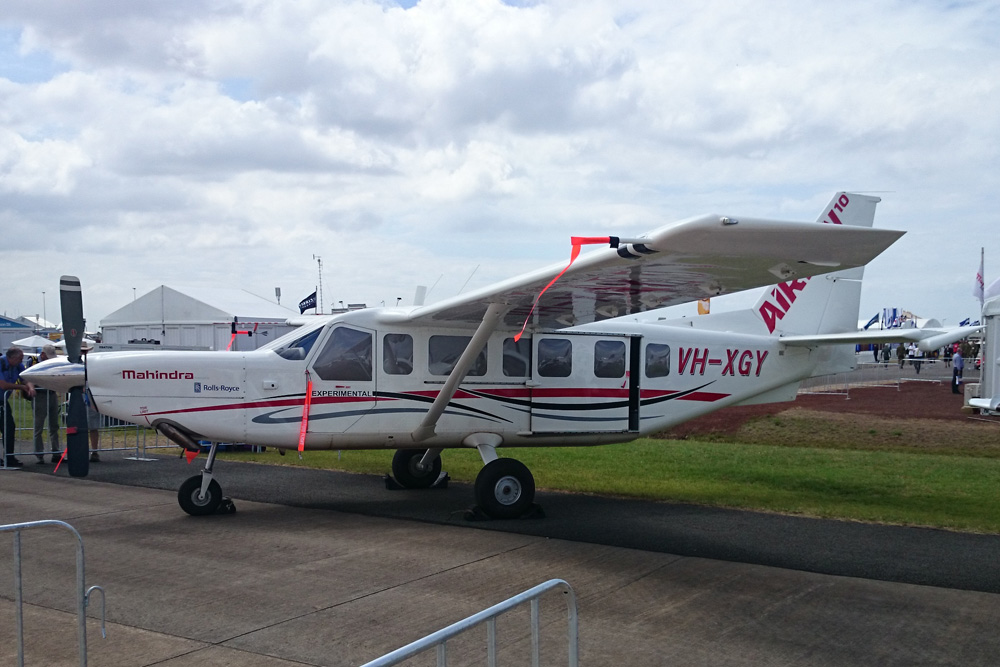
Stretched version of the GA8, with two extra cabin window on each side, six in total. The GA10 is powered by a single turboprop, with dual exhaust at the bottom of the nose. Due to the turbine engine, the engine cowling is different from the GA8 and GA8-TC320.
,_Luxembourg_PP1337967048.jpg)
.jpg)
The GA10 is longer than the GA8, not only due to a longer nose with turboprop engine but also a longer cabin. (photo: Bidgee/WikiMedia, modified)
_on_display_at_the_2015_Australian_International_Airshow.jpg)
Similar aircraft
Some airplanes look so similar to the Airvan that you may confuse them. Below you can read how to distinguish them.
Differences GA8/GA10 & Explorer 350R/500T
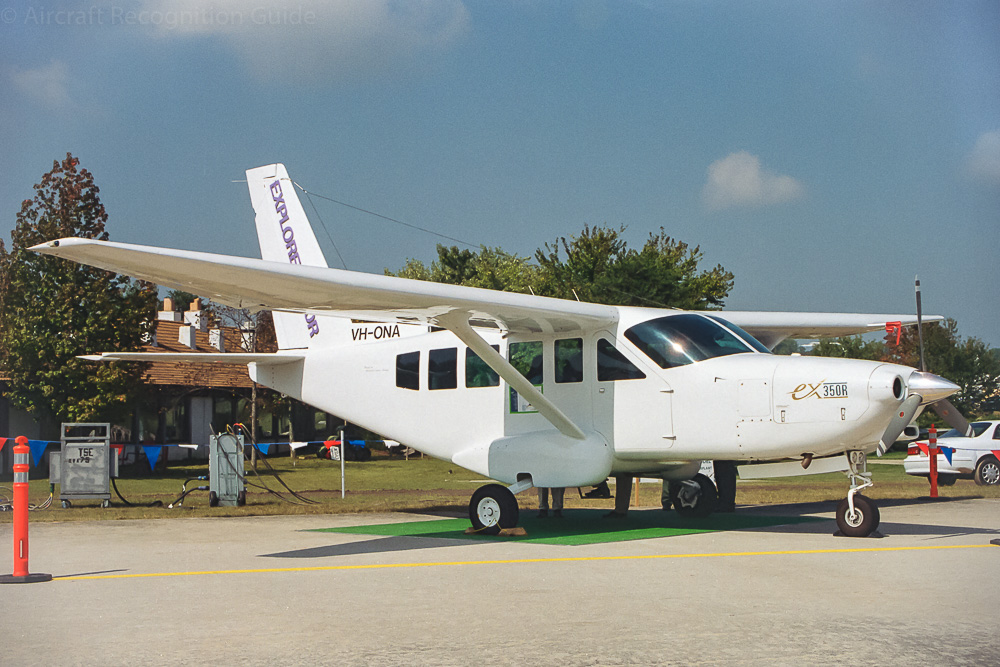
The Explorer 350T and 500T are about the same size as the Airvans, but have a retractable landing gear and associated streamline bodies at the wing strut attachment. Also the vertical stabiliser is taller and less of a triangle shape.
Differences GA8/GA10 & Gavilán 358M
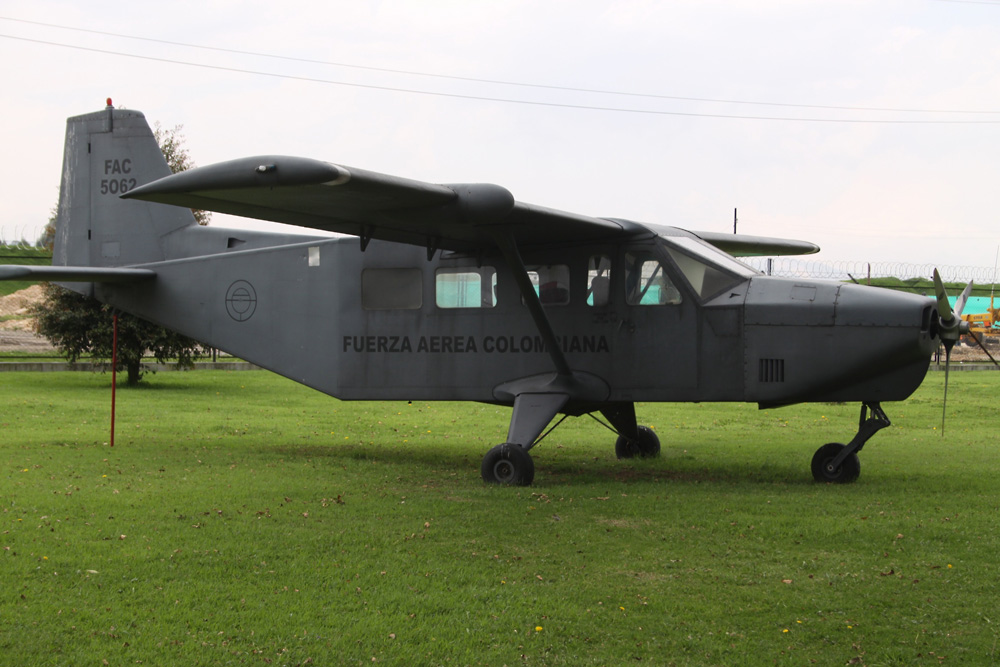
While the Airvan is not the most beautiful aircraft, the EL-1 or Gavilán 358M looks even worse. It has less rounded shapes than the Airvan and a trapezium shaped vertical stabiliser as main distinction points.
Differences GA8/GA10 & Cessna 206/207 Stationair

This long cabin version of the Cessna 172 could be confused with the Airvan, as it has the same basic shape. The Cessnas have a less tall, more curved vertical stabiliser without dent in the trailing edge. Also, the top of the fuselage slopes down towards the tail. There is a sort of rear cabin window in front of the dorsal fin. (photo: Igor Dvurekov/WikiMedia)

Differences GA8/GA10 & Daher (Quest) Kodiak
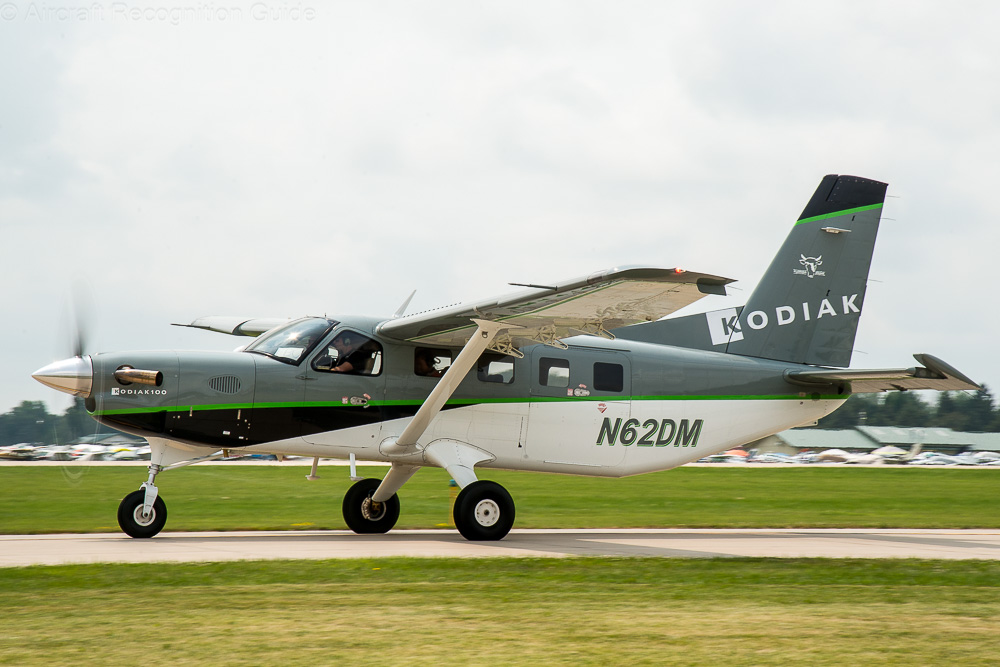
The Quest Kodiak looks more like a Cessna Caravan, but could still be mixed up with especially the GA10. The Kodiak has a taller, nearly rectangular vertical stabiliser. Also the two exhausts of the turboprop engine are on each side of the nose.
Differences GA8/GA10 & Cessna 208 Caravan
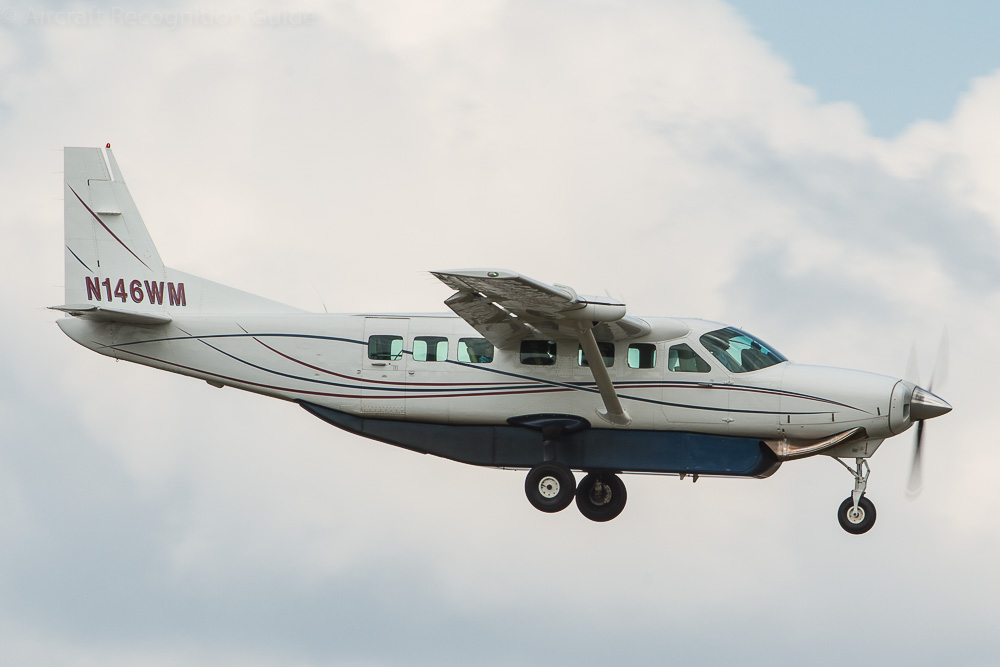
The difference between the Airvan and Cessna Caravan is mostly at the front and rear. The Caravan has a large, single exhaust on the right side and cockpit windows that are more curved. Finally, the vertical stabiliser is taller and has a more rectangular shape.