
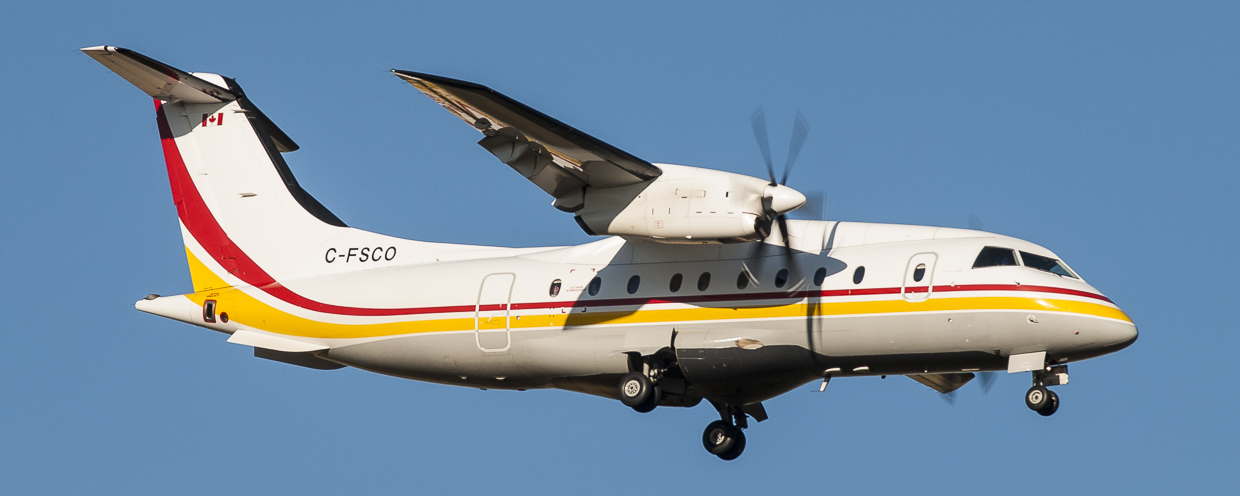
Dornier 328
When Dornier Aircraft was owned by Deutsche Aerospace, the company saw market potential for a new 30-seat turboprop commuter aircraft. Its speed was to be the main selling point. Therefore a lot was done to reduce drag. Apart from the streamlined nose, the wing-fuselage connection is covered by a long streamline body on top of the fuselage, that starts above the cockpit. The aircraft also has a large vertical stabiliser and associated dorsal fin, with two bents in the curved leading edge like on the ATR42. Other characteristics are the short landing gear, retracting in pods underneath the fuselage, ventral fins and the pointed tail cone. The latter is also a characteristic of the bigger ATR42, with which the Dornier 328 can be confused. The 328 has four cockpit windows, and many oval cabin windows.
When the first regional jets appeared, Dornier quickly responded with a jet version of the 328, marketed as 328JET. Apart from the jet engines under the wings, the jet version is externally the same as the turboprop version.

Much of the Dornier 328's speed comes from the streamlined nose and a streamline body on the top of the fuselage, starting at the cockpit.
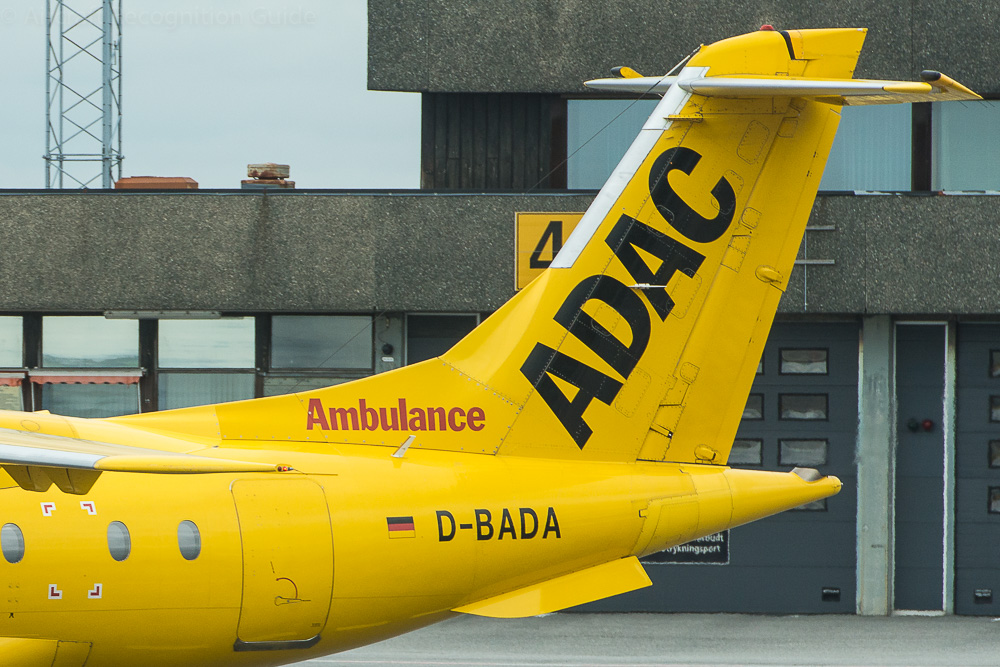
The tail of Dornier 328 could easily be confused with that of the ATR42. The tail cone is more pointed though and there are two ventral fins below the rear fuselage on nearly all versions.
How to recognise the different versions of the Dornier 328
The different versions of the Dornier 328 can be recognised by
- the type of engines, turboprop or jet
- the presence of ventral fins
- the shape of the dorsal fin and transition to vertical stabiliser
Dornier 328-100
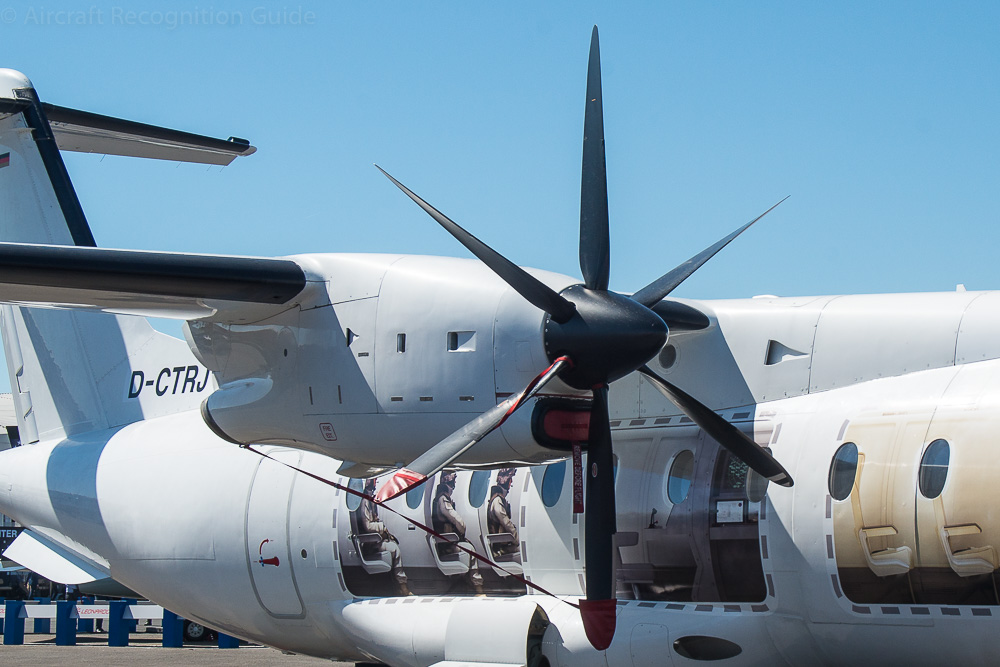
The first version of the Dornier 328, the 328-100, was a turboprop powered model. It has a turboprop engine in nacelles hanging under the leading edge of the wings, with the main intake below the prop spinner and exhaust at the lower rear. The propeller has six blades. Typical for the prototypes and the -100 is that they don't have ventral fins. All 328-100 where soon converted to one of the improved models below.
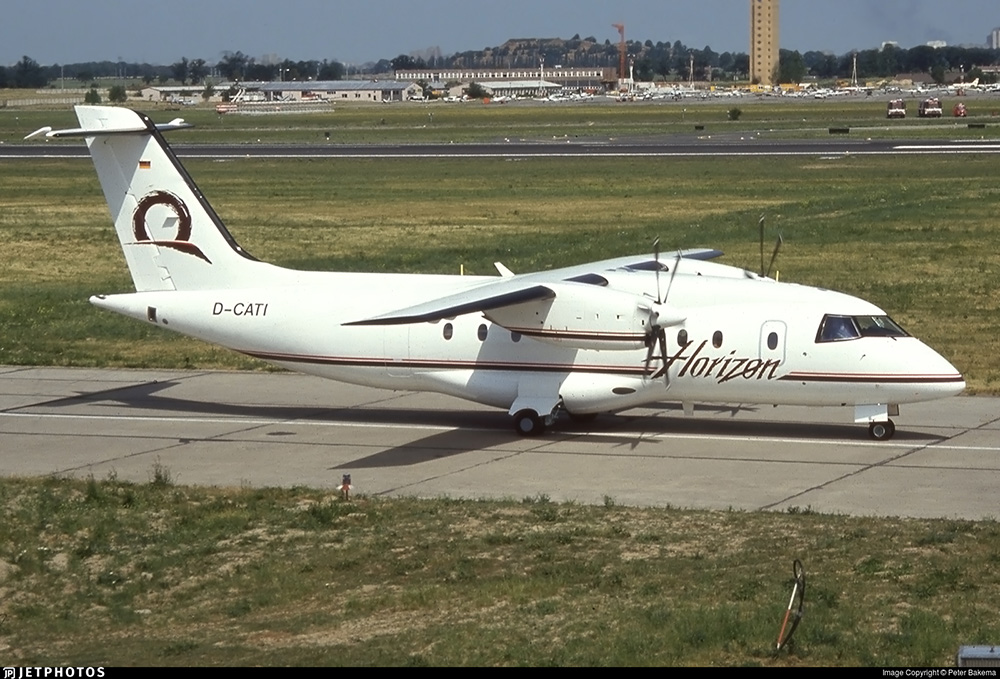
Dornier 328-110, -120 & -130
These are improved turboprop versions of the 328. Externally they are the same, they only differ in performances. Compared to the early Do328-100 they have ventral fins and a more curved transition from dorsal fin to vertical stabiliser.
The US Air Force has acquired secondhand aircraft for its Special Operations Command that are designated C-146A Wolfhound.

Here is a full view of a Dornier 328-110. Note the ventral fins and more curved dorsal fin to vertical stabiliser transition.
Dornier 328JET (Dornier 328-300) & Envoy 3
Instead of turboprop engines the Dornier 328-300, marketed as Do328JET, has jet engines in nacelles hanging under the wings. They have a single exhaust at the rear. The Envoy 3 was the marketing name of the corporate jet version of the aircraft with a luxury interior.


Similar aircraft
Some airplanes look so similar to the Dornier 328 that you may confuse them. Below you can read how to distinguish them.
Differences Dornier 328JET & Lockheed-Martin X-55
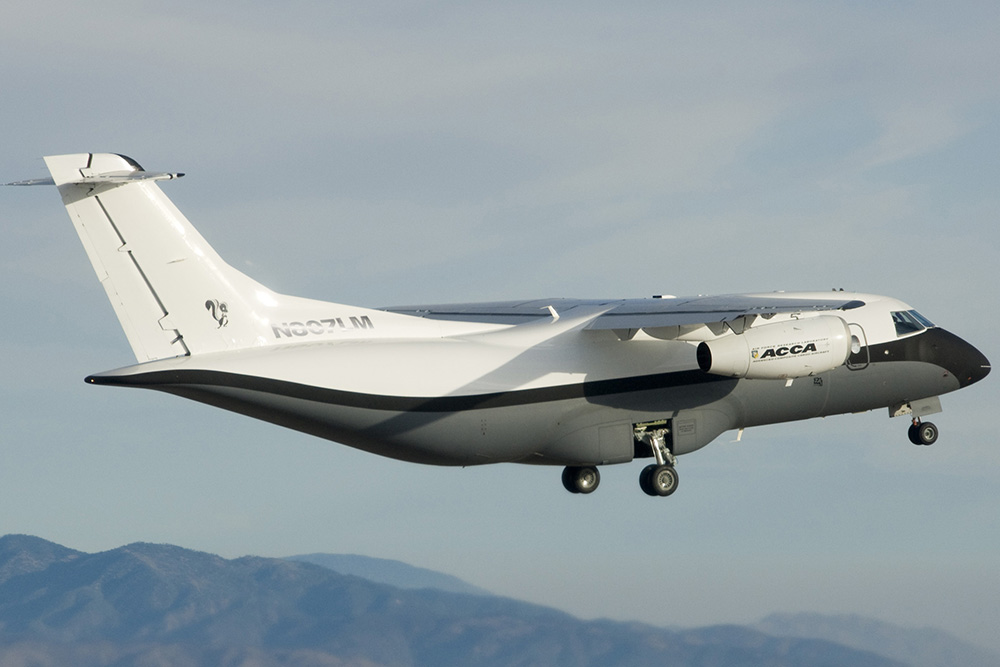
In the 1990s Lockheed-Martin converted a Do328JET with an all composite fuselage and tail, to study the use of advanced materials in a small cargo aircraft. The resulting X-55 has a revised rear fuselage compared to the original aircraft, and no cabin windows. The forward fuselage, wings and engines are original. (photo: NASA/DFRC/Carla Thomas/WikiMedia)
Differences Dornier 328 & Let L-610

The L-610 can be regarded as a crossover between a small ATR42 and the L-410, with about the same size as the Do328. It has six cockpit windows and single nose wheel, rectangular cabin windows like the ATR, but a much shorter tail cone. (photo: Aldo Bidini/WikiMedia)

Differences Dornier 328 & ATR42

The aircraft that looks most like the prop version is the ATR42. It has a similar pointed tail cone, although somewhat more blunt. The short landing gear and tail are also quite similar. The ATR has rectangular cabin windows though, and six instead of four cockpit windows. It has no streamline body on top of the fuselage like the Dornier.
Differences Dornier 328 & IPTN N250
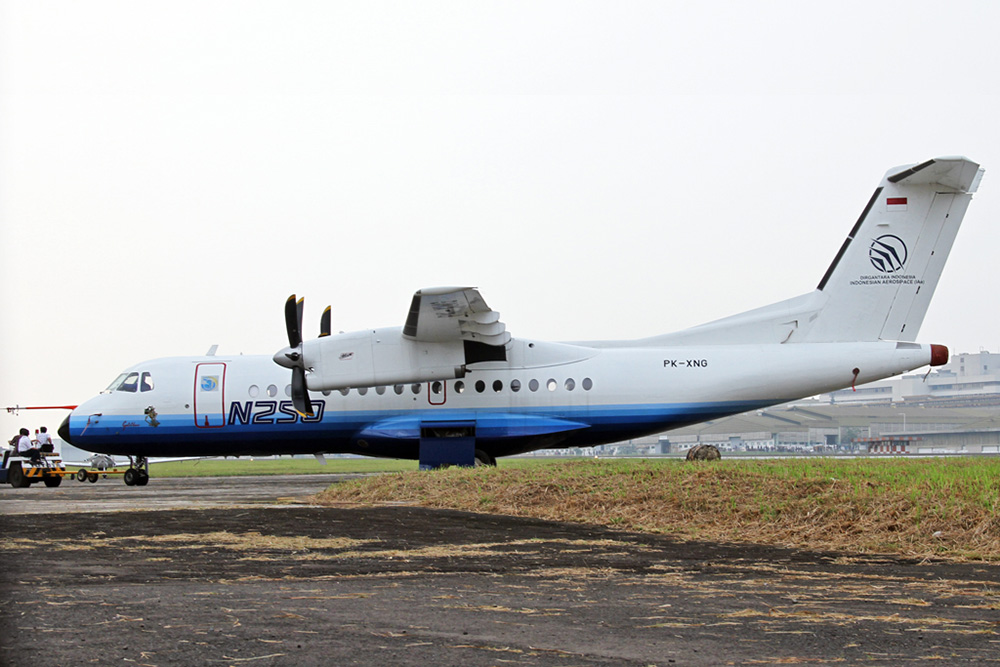
The N250 looks more like an ATR42 than an Dornier 328, alhough it has oval cabin windows. It has six cockpit windows and is bigger. (photo Eka viation/WikiMedia)
Differences Dornier 328 & DHC-8
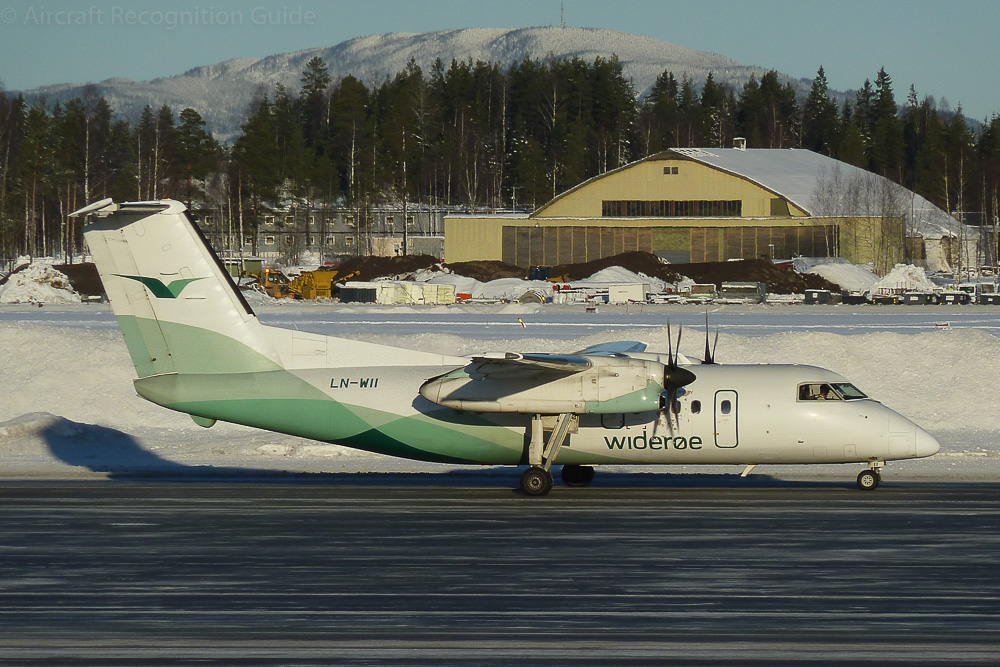
While being of the same size and basic configuration as the Dornier, the Dash 8 series 100/200 can be easily recognised by longer engine nacelles, in which the long main landing gear retracts.
Differences Dornier 328JET & An-148

This aircraft could be confused with the Do328JET, because it has the same basic configuration, although it is much larger than the Dornier, has swept wings with anhedral and engine nacelles with separate fan and core exhausts.
Differences Dornier 328JET & Embraer C-390
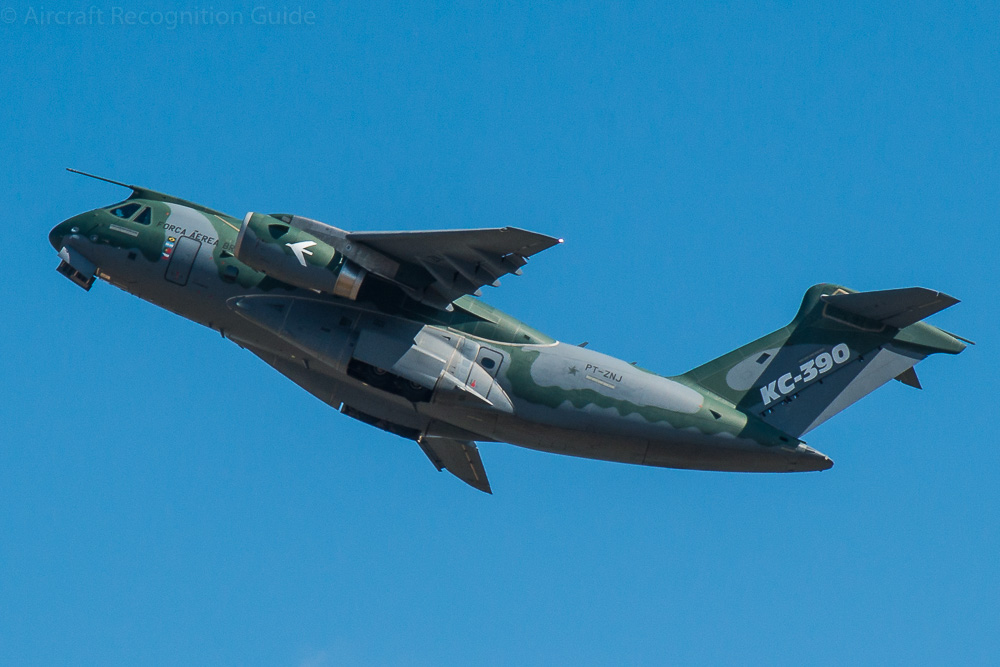
Another potential source for a mix-up with the 328JET is the C-390. This is a military transport aircraft with few cabin windows. Also it has six cockpit windows, a tandem main gear and a refuelling probe above the cockpit.